












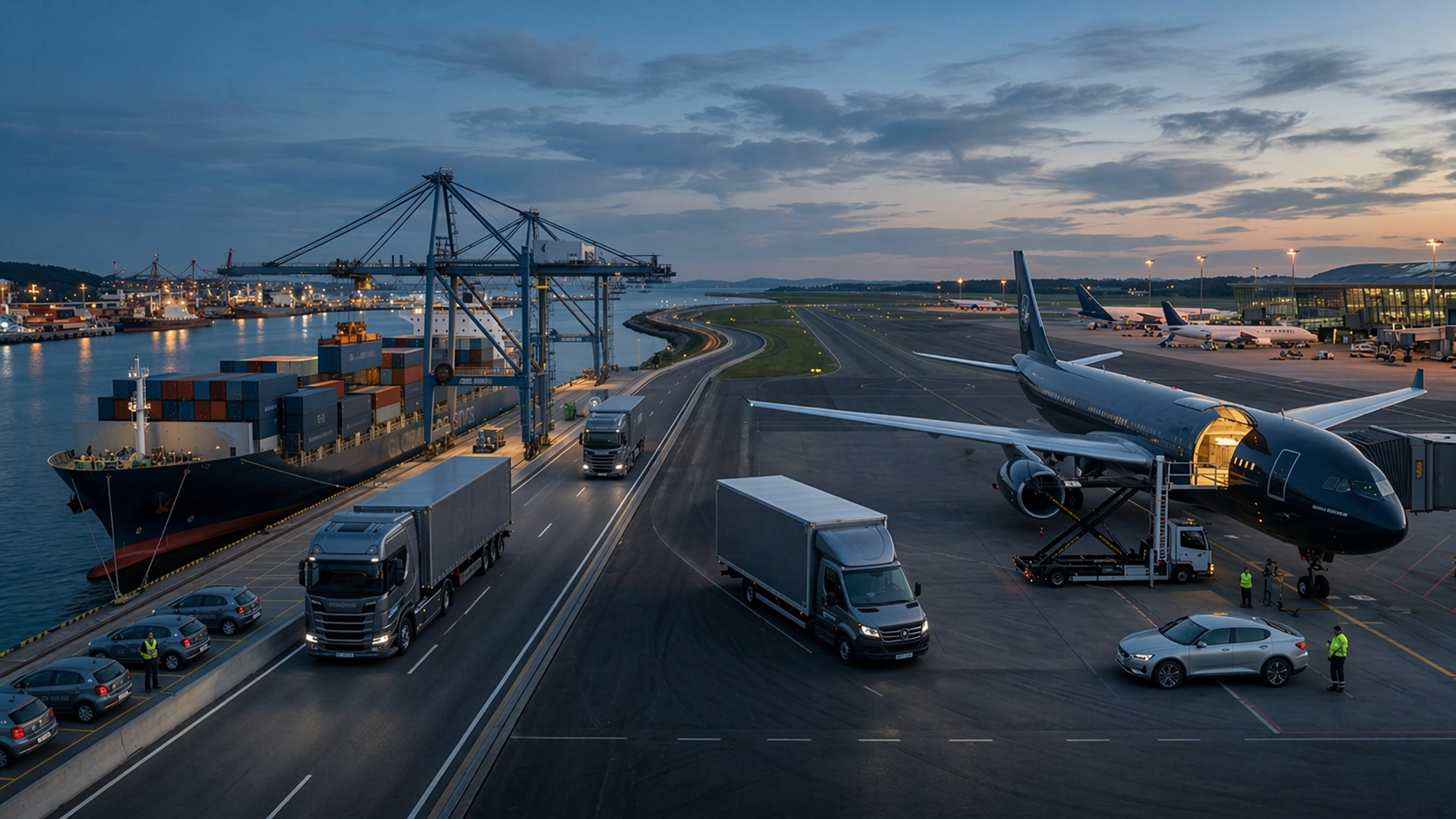
Types of Freight Forwarders: A Complete Guide
Estimated reading time: 10 minutes
Navigating the global supply chain requires more than just moving goods from point A to point B; it requires a strategic partnership with the right logistics experts. For businesses operating in Vietnam or expanding globally, understanding the various Types of Freight Forwarders: A Complete Guide is the first step toward optimizing operational efficiency and reducing overhead costs. In an era of shifting trade routes and digital transformation, the freight forwarding industry has evolved into a diverse ecosystem of specialists tailored to specific business needs.
Whether you are a startup shipping your first container or a multinational corporation managing complex distribution networks, the “one-size-fits-all” approach no longer applies to logistics. The global logistics landscape is now segmented into niche areas, from heavy-lift project cargo to high-speed air freight and tech-driven digital platforms. This guide explores the different categories of forwarders, their unique value propositions, and how to identify which type aligns with your business goals in today’s volatile market.
Table of Contents
- The Core Categories: Asset vs. Non-Asset Based
- Classification by Transport Mode
- Specialized and Niche Freight Forwarders
- The Digital Revolution in Forwarding
- Practical Lessons for Selecting a Partner
- How Scanwell Logistics Vietnam can help
- Conclusion
- FAQ
The Core Categories: Asset vs. Non-Asset Based
At the most fundamental level, the industry is split into two operational models. Understanding this distinction is crucial for managers who need to balance cost against control. When looking into the Types of Freight Forwarders: A Complete Guide, you must first determine if you need a partner who owns the equipment or one who manages the relationships.
Asset-Based Forwarders
Asset-based forwarders own the physical infrastructure—trucks, warehouses, and sometimes even planes or ships. These companies offer high levels of control and reliability because they are not dependent on third-party availability. In Vietnam, asset-based forwarders often have their own domestic trucking fleets and bonded warehouses, which can be a significant advantage for companies requiring tight security and scheduled deliveries.
Non-Asset Based Forwarders
These forwarders act as the “architects” of the supply chain. They do not own the vehicles; instead, they leverage a massive network of carriers to find the best rates and routes. Their value lies in flexibility and expertise. A non-asset forwarder can quickly pivot from one shipping line to another if a port becomes congested or if a better rate becomes available, making them highly resilient during global disruptions.
Classification by Transport Mode
While many forwarders offer multimodal solutions, many specialize in a specific mode of transport to provide deeper expertise and better contracted rates.
- Ocean Freight Forwarders: These are experts in sea transport. They often operate as Non-Vessel Operating Common Carriers (NVOCCs), meaning they can issue their own Bills of Lading and consolidate shipments (LCL) to help smaller businesses access competitive ocean rates.
- Air Freight Forwarders: Specializing in time-sensitive and high-value goods, these forwarders are typically IATA-accredited. They understand the nuances of airport security, rapid customs clearance, and the strict weight/volume calculations required for air cargo.
- Road and Rail Forwarders: Essential for domestic distribution and cross-border trade (such as between Vietnam, Cambodia, and China). They focus on “last-mile” delivery, heavy trucking, and intermodal transfers where cargo moves from rail to road seamlessly.
Specialized and Niche Freight Forwarders
Not all cargo is created equal. Some products require specialized handling that a generalist forwarder might not be equipped to manage. As part of our Types of Freight Forwarders: A Complete Guide, we must highlight those who handle “special cases.”
Perishable and Reefer Forwarders
For the agriculture and seafood industries in Vietnam, cold chain logistics is a lifeline. Reefer specialists focus on temperature-controlled containers and rapid transit to ensure that products like fruit or frozen seafood reach their destination without spoilage. They are experts in monitoring humidity, temperature, and ventilation throughout the journey.
Dangerous Goods (DG) Forwarders
Handling chemicals, batteries, or flammable materials requires specific certifications and deep knowledge of international maritime and aviation regulations (like IMDG or IATA DGR). These forwarders ensure that hazardous materials are packed, labeled, and documented correctly to avoid massive fines or safety incidents.
Project Cargo Forwarders
When a company needs to move an entire factory’s machinery or massive wind turbine blades, they call a project cargo specialist. These forwarders deal with “Out of Gauge” (OOG) cargo that doesn’t fit in standard containers. Their work involves detailed route surveys, specialized cranes, and complex permit applications.
The Digital Revolution in Forwarding
The traditional image of a freight forwarder—someone surrounded by stacks of paper and constantly on the phone—is fading. A new breed, the **Digital Freight Forwarder**, has emerged. These companies leverage cloud-based platforms to provide real-time quoting, booking, and tracking.
The impact on logistics operations is profound:
- Real-time Visibility: Shipments are tracked via GPS and satellite, allowing supply chain managers to anticipate delays.
- Data Analytics: By analyzing historical shipping data, these forwarders help businesses identify bottlenecks and optimize their inventory levels.
- Automated Documentation: Reducing human error in customs paperwork, which is a major cause of delays in international trade.
Practical Lessons for Logistics Professionals
Choosing the wrong partner can lead to delayed production lines and dissatisfied customers. Here are the best practices for selecting the right type of forwarder:
- Verify Certifications: Ensure they have the necessary licenses (e.g., VLA in Vietnam, IATA, or FIATA) and specialized certifications for your specific cargo type.
- Assess Technology Stack: Can they provide a dashboard for tracking, or do you have to call them for every update? Transparency is the modern standard.
- Evaluate Customs Expertise: Especially in Vietnam, local regulations change frequently. Your forwarder should act as a consultant, not just a middleman.
- Network Reach: A global forwarder is great for international lanes, but a local expert is often better for navigating provincial trucking and inland port bottlenecks.
How Scanwell Logistics Vietnam Can Help
Scanwell Logistics Vietnam bridges the gap between traditional reliability and modern technological efficiency. As a versatile partner, we encompass the best qualities of the various Types of Freight Forwarders: A Complete Guide. We combine a global reach with deep, localized knowledge of the Vietnamese market, ensuring your cargo moves smoothly through customs and across borders.
Our team provides end-to-end support, from initial planning and rate negotiation to final-mile delivery. Whether you require standard container shipping or complex multimodal solutions, Scanwell delivers the visibility and reliability that modern business leaders demand.
- Ocean Freight: Comprehensive FCL and LCL services with preferential space allocations.
- Air Freight: Expedited solutions for high-value and urgent electronics or garments.
- Warehousing & Distribution: Strategic storage solutions and inventory management.
- Domestic Logistics: A robust trucking network covering all major industrial zones in Vietnam.
- Customs Brokerage: Expert handling of documentation to ensure zero-delay clearance.
Conclusion
Understanding the different Types of Freight Forwarders: A Complete Guide empowers supply chain managers to make informed decisions that directly impact the bottom line. By categorizing forwarders by their assets, transport modes, and specializations, you can find a partner that does more than just move boxes—they become a strategic extension of your team.
As Vietnam continues to solidify its position as a global manufacturing powerhouse, the need for sophisticated, reliable, and tech-enabled logistics has never been greater. Whether you choose an asset-based giant or a nimble digital specialist, the key is to ensure they align with your specific cargo requirements and long-term business strategy.
Call to Action
Ready to turn these logistics insights into real competitive advantages?
Explore Scanwell Logistics Vietnam
Contact our experts for tailored support
FAQ
What is the difference between a Freight Forwarder and an NVOCC?
While often used interchangeably, an NVOCC (Non-Vessel Operating Common Carrier) can issue its own Bill of Lading and takes on the legal responsibility of a carrier, whereas a traditional forwarder may act purely as an agent for the shipper.
Should I use a different forwarder for air and ocean freight?
Not necessarily. Many top-tier forwarders, like Scanwell Logistics, have dedicated departments for both. Using one partner for multiple modes can simplify your communications and provide better data consolidation.
How do I know if I need a “Project Cargo” specialist?
If your cargo is oversized, overweight, or requires specialized equipment (like flat racks or open-top containers) and detailed engineering plans for transport, you need a project cargo specialist rather than a general forwarder.
How can I ensure my forwarder is reliable?
Check for established industry memberships, local office presence in your key markets (like Vietnam), and their ability to provide end-to-end visibility through modern tracking technology.