VGM in Shipping – Everything You Need to Know for Safe and Compliant Cargo Transport
Estimated reading time: 7 minutes
In the intricate world of global trade and logistics, the safe and efficient movement of cargo is paramount. Every detail, from the dimensions of a package to the final destination, plays a crucial role in ensuring a smooth supply chain. Among these critical details, one acronym stands out for its direct impact on maritime safety and regulatory compliance: VGM.
VGM, or Verified Gross Mass, is not merely a number; it’s a fundamental requirement designed to prevent catastrophic accidents at sea, streamline port operations, and safeguard all stakeholders in the shipping process. For businesses engaged in international trade, particularly those relying on ocean freight, understanding VGM in shipping – everything you need to know is not just good practice, it’s a legal and operational necessity. This article will delve into the intricacies of VGM, its vital importance, methods of accurate measurement, and how logistics leaders can navigate its challenges to ensure seamless, compliant, and secure cargo transport.
Table of Contents
- Understanding Verified Gross Mass (VGM) in Logistics
- Why VGM Matters: Safety, Compliance, and Efficiency
- Methods for Measuring VGM Accurately
- The Benefits and Challenges of Accurate VGM
- Practical Lessons for Logistics Professionals
- How Scanwell Logistics Vietnam Can Help
- Conclusion
- Call to Action
- FAQ
Understanding Verified Gross Mass (VGM) in Logistics
At its core, Verified Gross Mass (VGM) refers to the total weight of a shipping container, encompassing not only the cargo within but also all dunnage, bracing materials, and the tare weight of the container itself. It is a legally mandated declaration by the shipper, confirming the exact weight of a packed container before it can be loaded onto a vessel. This critical piece of data ensures that shipping lines and port operators have accurate weight information for every container, a factor that is indispensable for maritime safety.
The requirement for VGM emerged from a series of high-profile incidents involving vessels encountering stability issues, cargo shifting, and even capsizing, often linked to misdeclared container weights. Prior to its implementation, discrepancies between declared and actual weights were a significant hazard, leading to structural stress on ships, improper stowage planning, and dangerous working conditions for stevedores and crew. The International Maritime Organization (IMO) recognized this escalating risk and, through its SOLAS (Safety of Life at Sea) Convention, mandated the submission of VGM for all packed containers as of July 1, 2016. This regulation brought a new era of accountability and precision to containerized shipping.
Why VGM Matters: Safety, Compliance, and Efficiency
The importance of VGM extends far beyond a mere administrative requirement; it is a foundational element for ensuring the integrity of the entire maritime supply chain. Its significance can be broken down into three critical areas:
- Ensuring Maritime Safety: The primary driver behind the VGM mandate is safety. Accurate VGM helps shipping lines assess the true stability and balance of a vessel. When container weights are misdeclared, it can lead to dangerous situations such as stack collapses, structural damage to the ship, and even capsizing. Proper weight distribution and stability are crucial for a vessel to withstand normal loading and unloading operations, as well as adverse weather conditions at sea. By knowing the precise weight of each container, vessel masters can create accurate stowage plans that prevent overloading and ensure safe navigation.
- Compliance with International Regulations: VGM is a direct requirement of the IMO’s SOLAS Convention. Failure to provide an accurate VGM can result in serious consequences, including the container being refused loading onto the vessel, significant delays, and potential fines. This international standard ensures a uniform approach to container weighing across the globe, creating a safer and more predictable operating environment for all participants in international shipping. Compliance protects not only the shipping line but also the shipper from legal liabilities.
- Enhancing Operational Efficiency: Beyond safety and compliance, accurate VGM contributes significantly to operational efficiency. When shipping lines have reliable weight data, they can optimize vessel loading, plan routes more effectively, and reduce the risk of unexpected issues at ports. This leads to smoother operations, fewer delays, and ultimately, reduced transit times and costs for all parties involved in the logistics chain. Accurate VGM also helps in better resource allocation at terminals and facilitates quicker turnaround times for vessels, benefiting the overall global supply chain network. It also serves as important documentation for insurance purposes, helping to accurately determine the value of cargo on board in case of incidents.
Methods for Measuring VGM Accurately
The IMO SOLAS regulation outlines two permissible methods for shippers to obtain the Verified Gross Mass (VGM) of a packed container. Understanding these methods is crucial for ensuring compliance and avoiding potential disruptions in the supply chain.
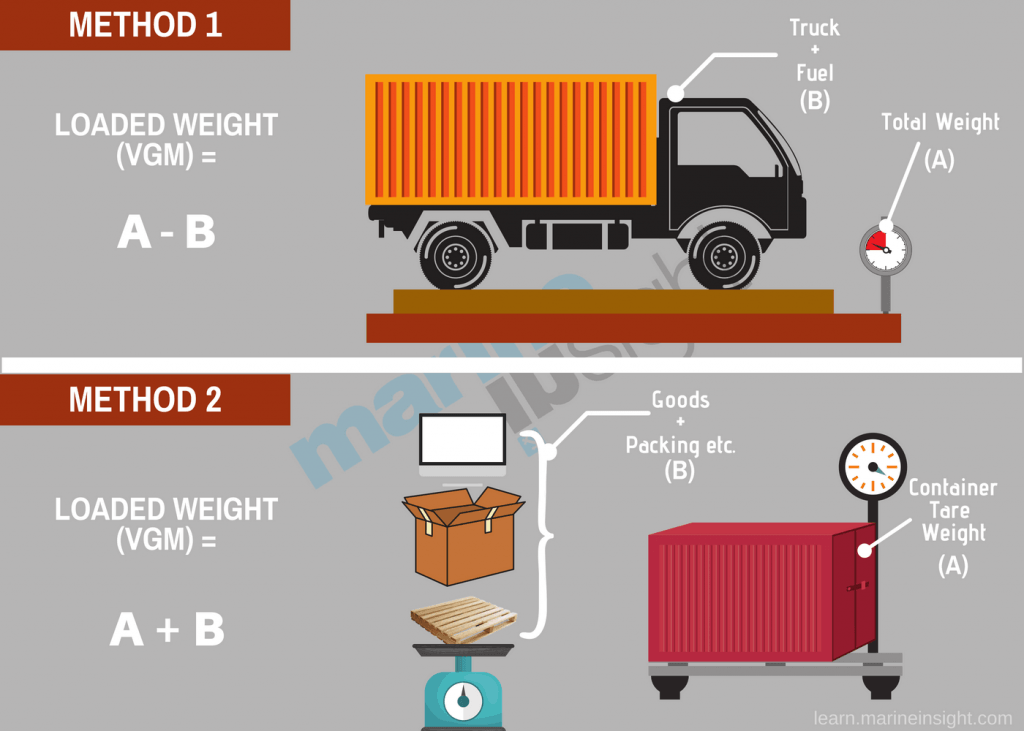
Method 1: Weighing the Packed Container
This is often considered the most straightforward and preferred method. Under Method 1, the shipper weighs the fully packed and sealed container after it has been loaded with cargo and all dunnage materials. This weighing must be performed using calibrated and certified equipment, such as a weighbridge or lifting equipment with a calibrator. The entire process ensures that the total gross mass of the container is precisely determined in one measurement. This method is particularly efficient when the packed container can be easily transported to a certified weighing station or when facilities at the packing location allow for such an operation.
Method 2: Weighing All Cargo and Adding the Container’s Tare Weight
Method 2 involves weighing all packages and cargo items, including the mass of pallets, dunnage, and other securing materials, and then adding this sum to the tare weight of the container. The tare weight of the container is typically printed on the container door. Similar to Method 1, all weighing equipment used for individual items must be calibrated and certified. This method is often employed when it is impractical or impossible to weigh the entire packed container, such as at a facility where individual items are consolidated before being loaded into the container. It requires meticulous record-keeping and careful calculation to ensure that no component of the total weight is missed.
While the research mentions “Using a VGM calculator,” it’s important to clarify that this is not a standalone approved method for determining VGM. Online calculators can be helpful for estimating or checking calculations but do not replace the requirement for actual physical weighing using certified equipment under either Method 1 or Method 2. The responsibility for accurately providing the VGM lies with the shipper, who must ensure that the chosen method adheres to the SOLAS regulations and local implementing guidelines set by the competent authority.
The Benefits and Challenges of Accurate VGM
The implementation and increasing adoption of VGM globally have brought about significant positive impacts, yet the process is not without its complexities. Understanding both the upsides and the hurdles is essential for businesses operating in today’s dynamic global trade landscape.
Benefits of Accurate VGM
- Reduced Risk of Accidents: By ensuring that containers are properly weighed and declared, the risk of maritime accidents stemming from misdeclared weights is significantly reduced. This protects vessels, crew, cargo, and the marine environment, making global shipping inherently safer.
- Improved Operational Efficiency: Accurate VGM allows shipping lines and port authorities to optimize loading and stowage plans, leading to more efficient vessel utilization and faster turnaround times at ports. This translates into smoother logistics operations, reduced delays, and potentially lower overall costs for freight forwarding and supply chain management.
- Enhanced Customer Service and Reliability: With precise weight information, logistics service providers can offer more accurate freight quotes and delivery estimates, improving transparency and reliability for their customers. This fosters greater trust and strengthens partnerships throughout the supply chain.
- Better Inventory and Capacity Planning: For shippers and carriers, accurate VGM data contributes to better inventory management and more effective planning of container capacity, ensuring optimal use of resources.
Challenges and Risks Associated with VGM
- Technical Difficulties in Measurement: Weighing containers accurately can be technically challenging, especially for oversized, complex, or heavy-lift cargo. Access to certified and calibrated weighing equipment can also be an issue in certain locations or for smaller businesses.
- Industry Adoption and Process Integration: While VGM adoption is increasing globally, some industries or regions have been slower to fully integrate compliant weighing processes into their standard operating procedures. This can lead to inconsistencies and potential compliance gaps.
- Compliance Risks and Penalties: Failure to comply with VGM regulations can result in severe consequences, including containers being refused loading (No VGM, No Load rule), significant delays, demurrage charges, re-weighing fees, and substantial fines. Beyond financial penalties, non-compliance can also damage a company’s reputation.
- Potential Supply Chain Disruptions: Inaccurate or missing VGM declarations can cause disruptions throughout the supply chain, leading to bottlenecks at ports, missed vessel cut-offs, and increased logistics costs. This highlights the critical need for precise data and robust processes.
- Container Weight Variability: The research notes that container weights can vary significantly, underscoring the importance of accurate, per-container VGM measurement rather than relying on estimates or historical data.
Despite these challenges, the trend points towards an increasing global adoption of VGM, driven by a continuous focus on safety, efficiency, and ongoing regulatory updates. Businesses that embrace accurate VGM practices are better positioned to navigate the complexities of international trade, minimize risks, and achieve greater reliability in their supply chain operations.
Practical Lessons for Logistics Professionals
Navigating the complexities of VGM requires a proactive and informed approach. For business leaders, supply chain managers, and logistics professionals, incorporating best practices into operations is crucial for maintaining compliance, ensuring safety, and optimizing efficiency.
- Prioritize Accurate Measurement Methods: Invest in or partner with facilities that possess certified and calibrated weighing equipment. Whether using Method 1 (weighing the packed container) or Method 2 (weighing individual cargo components), ensure that all equipment meets national and international standards. Regular calibration checks are non-negotiable.
- Foster Collaboration with Logistics Partners: Strong communication and collaboration with freight forwarders, carriers, and port terminals are essential. Share accurate VGM data promptly and clarify responsibilities for weighing and submission. A reliable logistics partner can significantly ease the burden of compliance.
- Leverage Technology for Data Management: Implement systems that capture, store, and transmit VGM data efficiently and accurately. Digital solutions can help streamline the process, reduce manual errors, and ensure timely submission to carriers. This can include integrating weighing station data directly into your Enterprise Resource Planning (ERP) or Transportation Management System (TMS).
- Conduct Regular Audits and Training: Periodically audit your VGM processes to identify potential weak points and ensure consistent compliance. Provide ongoing training for staff involved in cargo packing, weighing, and documentation to keep them updated on regulatory changes and best practices.
- Stay Informed on Regulatory Updates: International shipping regulations, including those related to VGM, can evolve. Dedicate resources to monitor updates from the IMO, local maritime authorities, and industry associations to adapt your processes accordingly.
- Integrate VGM into Supply Chain Planning: Don’t view VGM as an isolated step. Integrate it into your overall supply chain planning, from initial cargo booking to final delivery. This holistic approach ensures that potential weighing challenges or delays are factored in early, preventing downstream disruptions.
How Scanwell Logistics Vietnam Can Help
Navigating the stringent requirements of VGM in shipping can be complex, especially for businesses managing diverse cargo types and global supply chains. At Scanwell Logistics Vietnam, we understand these challenges intimately and are committed to providing comprehensive logistics solutions that ensure compliance, optimize efficiency, and guarantee the safety of your cargo. Our expertise as a leading freight forwarding and logistics provider in Vietnam positions us as your ideal partner in managing VGM effectively.
We offer guidance and support to ensure your cargo meets all VGM regulations, preventing delays and penalties. Our strong relationships with shipping lines and port authorities, combined with our advanced operational capabilities, allow us to streamline your export and import processes. With Scanwell Logistics Vietnam, you gain a partner dedicated to delivering peace of mind through reliable, compliant, and cost-effective logistics services.
- Ocean Freight Solutions: Comprehensive FCL/LCL services on key global trade lanes, ensuring proper VGM submission and seamless port operations.
- Air Freight Expertise: While primarily a maritime regulation, our air freight services are also backed by a commitment to accurate weight declarations and cargo safety for time-sensitive shipments.
- Warehousing & Distribution: Integrated warehousing services that can include pre-weighing and consolidation, ensuring cargo is VGM-ready before containerization.
- Domestic and Cross-Border Trucking: Efficient inland transportation, coordinating with certified weighing stations for accurate VGM acquisition as part of the overall logistics plan.
- Customs Brokerage & Compliance: Expert customs clearance and trade compliance support, helping you navigate documentation requirements, including VGM declarations, to avoid delays.
- Supply Chain Visibility & Consultancy: Offering end-to-end visibility and expert advice on optimizing your supply chain, including best practices for VGM management and risk mitigation.
Conclusion
The Verified Gross Mass (VGM) regulation stands as a cornerstone of modern maritime logistics, profoundly impacting how cargo is prepared, transported, and delivered across the globe. What began as a critical response to safety hazards has evolved into an indispensable component of efficient and compliant international trade. For businesses, understanding VGM in shipping – everything you need to know is not merely about adhering to a rule; it’s about embracing a standard that minimizes risks, enhances operational reliability, and contributes to the overall stability of the global supply chain.
While challenges such as technical measurement difficulties and the need for consistent industry adoption persist, the benefits of accurate VGM — including vastly improved safety, streamlined operations, and reduced financial risks — far outweigh these hurdles. Logistics leaders must recognize VGM as an integral part of their strategic planning, leveraging technology and fostering strong partnerships to ensure unwavering compliance. By prioritizing accurate weight declarations, businesses can safeguard their cargo, protect their reputation, and contribute to a safer, more predictable future for maritime shipping.
Call to Action
Ready to turn these logistics insights into real competitive advantages?
Explore Scanwell Logistics Vietnam
Contact our experts for tailored support
FAQ
What happens if VGM is incorrect or missing?
If the Verified Gross Mass (VGM) is incorrect or missing, the container will likely be refused loading onto the vessel (the “No VGM, No Load” rule). This can lead to significant delays, additional costs such as demurrage and re-weighing fees, potential fines from port authorities or shipping lines, and serious disruptions to your supply chain. It also carries compliance risks and can damage your company’s reputation.
Who is responsible for providing the VGM?
Under the IMO SOLAS regulations, the shipper (or a party designated by the shipper) is legally responsible for obtaining and documenting the Verified Gross Mass (VGM) of a packed container. This responsibility cannot be delegated away, even if a third party performs the actual weighing. The shipper must ensure the accuracy of the VGM submitted to the shipping line.
Can a freight forwarder help with VGM compliance?
Yes, a knowledgeable freight forwarder like Scanwell Logistics Vietnam can play a crucial role in assisting shippers with VGM compliance. While the shipper remains ultimately responsible, a freight forwarder can provide guidance on regulations, help coordinate certified weighing services, ensure timely submission of VGM data to carriers, and integrate VGM processes seamlessly into the overall freight forwarding operation. Partnering with an experienced logistics provider helps mitigate risks and streamlines compliance efforts.
What are the two approved methods for obtaining VGM?
The two approved methods for obtaining VGM are:
1. **Method 1:** Weighing the entire packed container after it has been loaded and sealed, using calibrated and certified equipment.
2. **Method 2:** Weighing all packages and cargo items, dunnage, and other securing materials, and then adding the tare weight of the container to that sum. All weighing equipment must be calibrated and certified.