















Quick Commerce: Behind the 10-Minute Delivery Race
Estimated reading time: 8 minutes
The promise of Quick Commerce: Behind the 10-Minute Delivery Race has fundamentally reset consumer expectations for speed and convenience. What began as a niche offering for urgent grocery needs has rapidly evolved into a mainstream logistics battleground where minutes—not hours or days—define competitive advantage. This shift forces every stakeholder in the supply chain, from warehouse operators to last-mile carriers, to rethink traditional operating models.
However, the glossy front-end experience of a grocery order arriving before the ice cream melts masks a brutal reality of operational complexity. Achieving consistent sub-15-minute fulfilment requires more than just fast bikes; it demands a symphony of real-time inventory visibility, predictive demand positioning, and algorithmic route optimization. For logistics leaders and supply chain managers, understanding the hidden architecture powering this speed is no longer optional—it is a prerequisite for survival in the modern fulfilment landscape.
This article dissects the mechanics, economics, and technology stack underpinning the 10-minute delivery model. We explore the critical role of smart orchestration, the impact of AI and autonomous technologies, and the practical lessons logistics professionals can apply to their own networks—whether they operate in quick commerce or traditional B2B/B2C distribution.
Table of Contents
- Understanding Quick Commerce in the Logistics Context
- Key Trends and Data Shaping the 10-Minute Race
- Operational Friction and the Imperative for Smart Orchestration
- Technology Enablers: AI, IoT, and Autonomous Fleets
- Redefining Customer Experience in the Instant Economy
- Practical Lessons for Logistics Professionals
- How Scanwell Logistics Vietnam Can Help
- Conclusion
- Call to Action
- FAQ
Understanding Quick Commerce in the Logistics Context
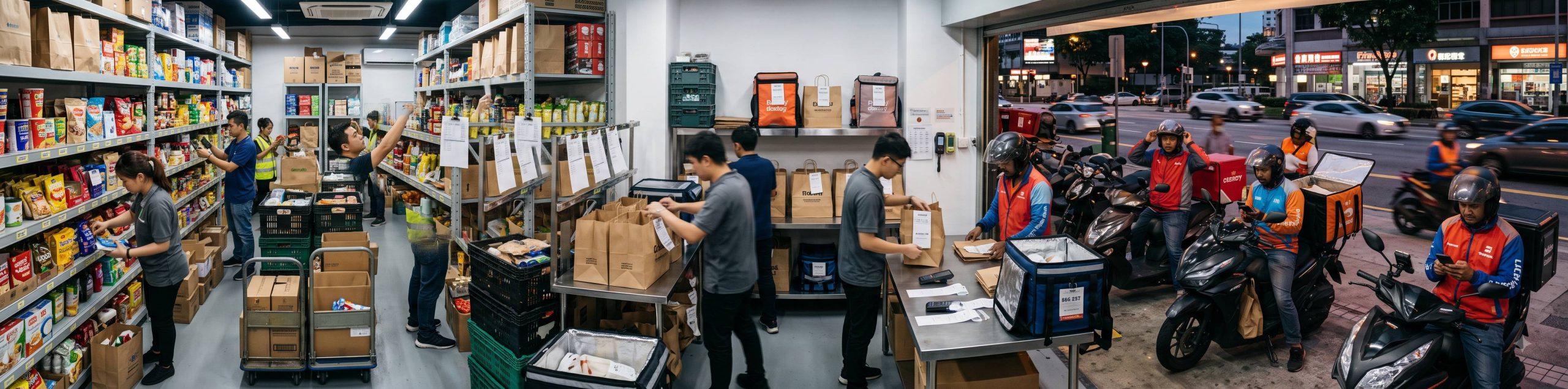
Quick commerce (q-commerce) distinguishes itself from traditional e-commerce logistics through a singular, ruthless constraint: time. While standard e-commerce optimizes for cost-per-parcel and next-day delivery windows, q-commerce optimizes for order-to-door latency, typically targeting 10 to 15 minutes. This compression fundamentally alters the physics of the supply chain. The traditional “hub-and-spoke” model—where goods flow from central distribution centers (DCs) to regional hubs and finally to customers—is too slow. The 10-minute radius demands a decentralized, hyper-local network of micro-fulfilment centers (MFCs) or “dark stores” positioned within 2–3 kilometers of dense demand clusters.
This structural shift creates a new set of logistics variables. Inventory management transitions from weekly replenishment cycles to near-real-time SKU-level balancing across dozens of micro-sites. Order management systems (OMS) must route orders not just to the nearest stock, but to the optimal node considering picker availability, pack-station throughput, and rider proximity. Transportation management evolves from route planning for trucks to dynamic dispatching for two-wheeler fleets, often managing hundreds of concurrent micro-trips per hour per dark store.
The stakes are high. A missed 10-minute window is not a “late delivery”—it is a broken brand promise. Consequently, the operational margin for error is near zero. Logistics operators in this space cannot rely on manual interventions or batch processing. Every second of “operational friction”—the cumulative delay of order acknowledgment, pick-list generation, item retrieval, packing, handoff, and doorstep navigation—must be engineered out of the process.
Key Trends and Data Shaping the 10-Minute Race
The rapid maturation of the quick commerce sector is backed by aggressive market projections and technology adoption curves. Understanding these macro trends is essential for capacity planning and strategic investment decisions.
- Explosive Market Growth: The global quick commerce market is projected to grow at a Compound Annual Growth Rate (CAGR) of 24.3% from 2023 to 2028 (MarketsandMarkets). This growth signals a structural shift in retail logistics, not a temporary pandemic-era anomaly.
- Delivery Time Benchmarks: The industry standard has settled in the 10–15 minute range, with leading players pushing toward consistent sub-10-minute averages in optimal zones (Business Insider). Same-day delivery, once the gold standard, is now the “slow lane” for this segment.
- AI/ML Adoption Acceleration: The deployment of Artificial Intelligence and Machine Learning in quick commerce operations is expected to surge by 30% over the next two years (Forbes). This investment targets demand forecasting, dynamic slotting, and rider allocation algorithms.
- Autonomous Fleet Horizon: The global autonomous vehicle market, a critical enabler for future unit economics, is forecast to expand at a 39.4% CAGR from 2023 to 2028 (Grand View Research). While regulatory hurdles remain, pilot programs for sidewalk robots and drone drops are active in multiple geographies.
These data points confirm that the quick commerce logistics stack is capital-intensive, technology-heavy, and rapidly automating. Companies that treat this as a “last-mile only” problem—ignoring the upstream inventory and data infrastructure—will struggle to scale profitably.
Operational Friction and the Imperative for Smart Orchestration
Research identifies “operational friction” as the primary antagonist in the 10-minute narrative. This friction comprises the non-value-added time consumed by: order ingestion latency (API to OMS), pick-path inefficiency, pack-station bottlenecks, rider handoff delays, and last-meter navigation (elevators, security gates, door codes). In a 600-second window, a 30-second delay at the pack station represents a 5% SLA breach risk.
Smart orchestration is the systemic answer. It moves beyond simple automation (executing predefined rules) toward autonomous decision-making (optimizing outcomes in real-time). Effective orchestration layers three capabilities:
- Predictive Positioning: Using historical sales, weather, events, and real-time browsing signals to pre-position high-velocity SKUs in the specific dark stores most likely to serve imminent demand. This reduces the “pick” distance and out-of-stock substitutions.
- Dynamic Resource Allocation: Continuously matching order waves to picker capacity and rider availability. If a store hits a picker bottleneck, the orchestration engine instantly re-routes new orders to the next-best node with slack capacity, rather than queuing them.
- End-to-End Visibility: A single pane of glass showing order status, inventory positions, rider locations (GPS), and traffic conditions. This enables exception management—intervening only when the system predicts an SLA miss.
Without this orchestration layer, dark stores operate as isolated islands, leading to the “bullwhip effect” at micro-scale: one store stockouts while a neighbor 1.5km away holds excess safety stock, and riders crisscross inefficiently. Smart orchestration transforms a collection of fast stores into a cohesive, resilient network.
Technology Enablers: AI, IoT, and Autonomous Fleets
The research highlights a 30% expected increase in AI/ML usage within two years. This is not hype; it is a functional necessity. The combinatorial complexity of assigning thousands of orders to hundreds of riders across dozens of stores—while respecting traffic, weight limits, battery levels, and SKU affinity—exceeds human planner capacity.
Core Technology Pillars
- Demand Forecasting & Auto-Replenishment: Gradient-boosted models and transformers ingest POS data, search trends, and seasonality to generate store-level, SKU-level demand forecasts updated hourly. These feed automated replenishment orders from central hubs to dark stores, often via “milk run” routes optimized for freshness and capacity.
- IoT & Real-Time Tracking: Smart shelves (weight sensors), RFID gates, and picker wearables (scanners, wrist displays) feed a digital twin of the dark store. This enables “goods-to-person” picking validation, automatic cycle counts, and instant out-of-stock detection—critical for preventing the “item not found” delay that kills the 10-minute SLA.
- Autonomous Vehicles & Drones: While widespread sidewalk robot deployment faces regulatory friction, the 39.4% CAGR (Grand View Research) indicates heavy R&D spend. Current pilots focus on: (a) Hub-to-dark-store line-haul (middle mile) using L4 trucks on fixed routes; (b) Dark-store-to-customer last 500m via sidewalk bots; (c) Vertical buildings via drone windows/landing pads. The unit economics target removing the rider cost (often 60–70% of last-mile cost).
Integration is the hidden challenge. A best-in-class forecasting model adds zero value if the WMS cannot execute the recommended slotting change before the next picking wave. Logistics CTOs must prioritize API-first, event-driven architectures over monolithic ERPs to enable this speed of data-to-action.
Redefining Customer Experience in the Instant Economy
The 10-minute race has elevated delivery from a logistic function to a core product feature. Customers in the quick commerce funnel exhibit distinct behavioral traits: low tolerance for substitution errors, high demand for transparency (live rider map), and expectation of instant support resolution.
Logistics operations must engineer for these expectations:
- Live Visibility: Not just “out for delivery,” but a real-time map trace, rider photo, and predictive ETA updating every 15 seconds. This requires low-latency telemetry from rider apps to customer frontend.
- Flexible Handoff Protocols: Support for contactless drop (photo proof), locker/lockbox codes, concierge handoff, and age-verification flows (alcohol, pharma) without adding minutes to the doorstep dwell time.
- Proactive Communication: Automated alerts for “picker started,” “rider assigned,” “rider approaching,” and “delivered.” In exception cases (stockout, traffic), the system must offer instant alternatives (substitute, partial refund, reschedule) via in-app chat/bot—no call-center hold times.
For traditional logistics providers, the lesson is clear: the “delivery experience” is now a differentiator equal to product price or assortment. Investing in the customer-facing layer of the logistics stack (tracking, comms, flexibility) yields disproportionate retention gains.
Practical Lessons for Logistics Professionals
Whether you manage a quick commerce fleet, a 3PL network, or an in-house distribution operation, the principles driving the 10-minute model are transferable. Here are actionable takeaways:
- Decentralize Inventory Strategically: Move safety stock closer to demand density. Use network optimization tools to identify the optimal number and location of forward stocking points. Ponytail: Start with top 20% SKUs driving 80% of volume; expand based on ROI.
- Design for Flow, Not Storage: Dark stores are flow-through centers, not warehouses. Layouts should minimize pick path (U-flow or serpentine), eliminate staging areas, and enable one-touch pack-to-bag. Target < 60 seconds pick-to-pack per order.
- Automate Decisions, Not Just Tasks: Deploy rule engines for routine dispatch, but invest in ML for dynamic replanning (traffic, weather, picker no-shows). The goal is “management by exception”—humans handle the 5% the model flags, not the 95% it solves.
- Build a Real-Time Data Backbone: Event streaming (Kafka, Pulsar) connecting OMS, WMS, TMS, rider app, and customer app. Batch syncs (hourly/daily) are incompatible with 10-minute SLAs. Ponytail: If legacy ERP cannot stream, build an event layer on top via CDC (Change Data Capture).
- Treat Tracking as a Product: Invest in the customer-facing tracking UI/UX. Branded, accurate, proactive tracking reduces “Where is my order?” (WISMO) tickets by 30–50% and drives NPS.
- Standardize Compliance at the Edge: Age verification, hazardous materials (batteries, aerosols), cold-chain proof—embed these checks in the picker/packer app with hard stops, not paper checklists. Prevents failed deliveries and regulatory fines.
How Scanwell Logistics Vietnam Can Help
The transition to faster, smarter, decentralized logistics—whether for quick commerce fulfilment or accelerated B2B distribution—requires a partner with deep operational expertise and a technology-enabled network. Scanwell Logistics Vietnam combines global freight management capability with localized warehousing, distribution, and customs clearance services tailored for the Vietnamese market and key ASEAN trade lanes.
We help clients de-risk their supply chain transformation by providing the physical infrastructure (strategically located warehouses, cross-dock facilities) and the digital connective tissue (visibility platform, customs automation, last-mile integration) needed to compress lead times and improve reliability. Our team works as an extension of your supply chain function, designing solutions that balance speed, cost, and compliance.
- Ocean Freight (FCL/LCL) on major Asia–Europe, Transpacific, and Intra-Asia lanes.
- Air Freight solutions for time-critical and high-value cargo.
- Warehousing, cross-docking, and value-added services (kitting, labeling, QC) in key Vietnamese hubs.
- Domestic trucking and cross-border road transport (Vietnam–China, Vietnam–Cambodia, Vietnam–Laos).
- Customs brokerage, HS classification advisory, and trade compliance (AEO support, FTA utilization).
- Supply chain visibility dashboard with milestone tracking, exception alerts, and KPI reporting.
Conclusion
The 10-minute delivery race is a proving ground for the future of logistics. It demonstrates that speed is not merely a function of faster vehicles—it is the output of a deeply integrated system: predictive intelligence positioning inventory, real-time orchestration balancing capacity, frictionless warehouse execution, and transparent customer communication. The companies winning this race are those that have collapsed the traditional sequential handoffs (plan → source → make → deliver) into a parallel, data-driven flow.
For the broader logistics industry, the implications are profound. The technologies and operational patterns forged in quick commerce—micro-fulfilment, AI-driven replenishment, gig-fleet orchestration, live visibility—are migrating upstream into mid-mile and first-mile operations. B2B distributors are adopting dark-store models for MRO spares. Manufacturers are positioning finished goods in urban micro-hubs for same-day B2C and B2B fulfilment. The line between “quick commerce” and “modern logistics” is blurring.
Leaders should view this not as a niche trend to watch, but as a stress test for their own networks. Ask: Can our current architecture support 2-hour fulfilment? 1-hour? What breaks first—inventory accuracy, pick throughput, dispatch latency, or visibility? The answers will define your roadmap for the next 3–5 years.
Call to Action
Ready to turn these logistics insights into real competitive advantages?
Explore Scanwell Logistics Vietnam
Contact our experts for tailored support
FAQ
What is the difference between quick commerce and traditional e-commerce logistics?
Traditional e-commerce optimizes for cost efficiency and next-day/2-day delivery windows using centralized fulfilment centers. Quick commerce optimizes for ultra-low latency (10–15 minutes) using a dense network of hyper-local micro-fulfilment centers (dark stores), real-time orchestration, and two-wheeler fleets. The cost-to-serve is higher, but the value proposition is instant gratification for high-frequency, low-basket categories (groceries, pharmacy, convenience).
Is the 10-minute delivery model profitable or sustainable?
Unit economics remain challenging. High fixed costs (dark store rent, picker labor, rider payouts) require extreme density and basket size to break even. Profitability improves through: (1) increasing order frequency via subscription/loyalty, (2) private label margin expansion, (3) automation (auto-store, robotic picking) to reduce labor, and (4) advertising/retail media revenue. Consolidation and platform models (marketplace vs. inventory-led) are still evolving. Logistics partners that offer variable-cost fulfilment (pay-per-order) help brands test q-commerce without heavy capex.
How can a traditional 3PL or shipper adopt quick commerce capabilities without building dark stores?
Start with “fast commerce” (1–3 hour windows) using existing forward stocking points or retail stores as micro-hubs (ship-from-store). Implement an OMS with real-time inventory sync and dynamic order routing. Partner with on-demand fleet providers (Uber, Grab, local gig platforms) for burst capacity. Invest in the data layer (demand forecasting, live tracking) first—physical footprint follows proven demand density. Scanwell Logistics Vietnam offers the warehousing footprint and technology integrations to pilot this model in Vietnam and Southeast Asia.
What role does customs and compliance play in cross-border quick commerce?
Cross-border q-commerce (e.g., CBEC into Vietnam) faces a hard constraint: customs clearance cannot be compressed to 10 minutes. The solution is pre-clearance: bulk import into a bonded warehouse or FTZ near the border/airport, complete customs formalities in advance, then fulfil domestic 10-minute orders from that local stock. This requires sophisticated HS classification, valuation, and FTZ/bonded warehouse management—core competencies of Scanwell’s customs brokerage team.
Which technology investment yields the highest ROI for faster fulfilment?
Real-time inventory visibility across all nodes (DCs, stores, dark stores, in-transit). Without a single source of truth for “available-to-promise” stock, no orchestration, routing, or promise engine can function accurately. This is typically an integration project (connecting WMS, ERP, POS, OMS via event streaming) rather than a new software purchase. It unlocks every downstream speed initiative: ship-from-store, dynamic safety stock, and accurate customer promises.