













LogiNext AI Insights: From Data to Decisions
Estimated reading time: 8 minutes
Introduction
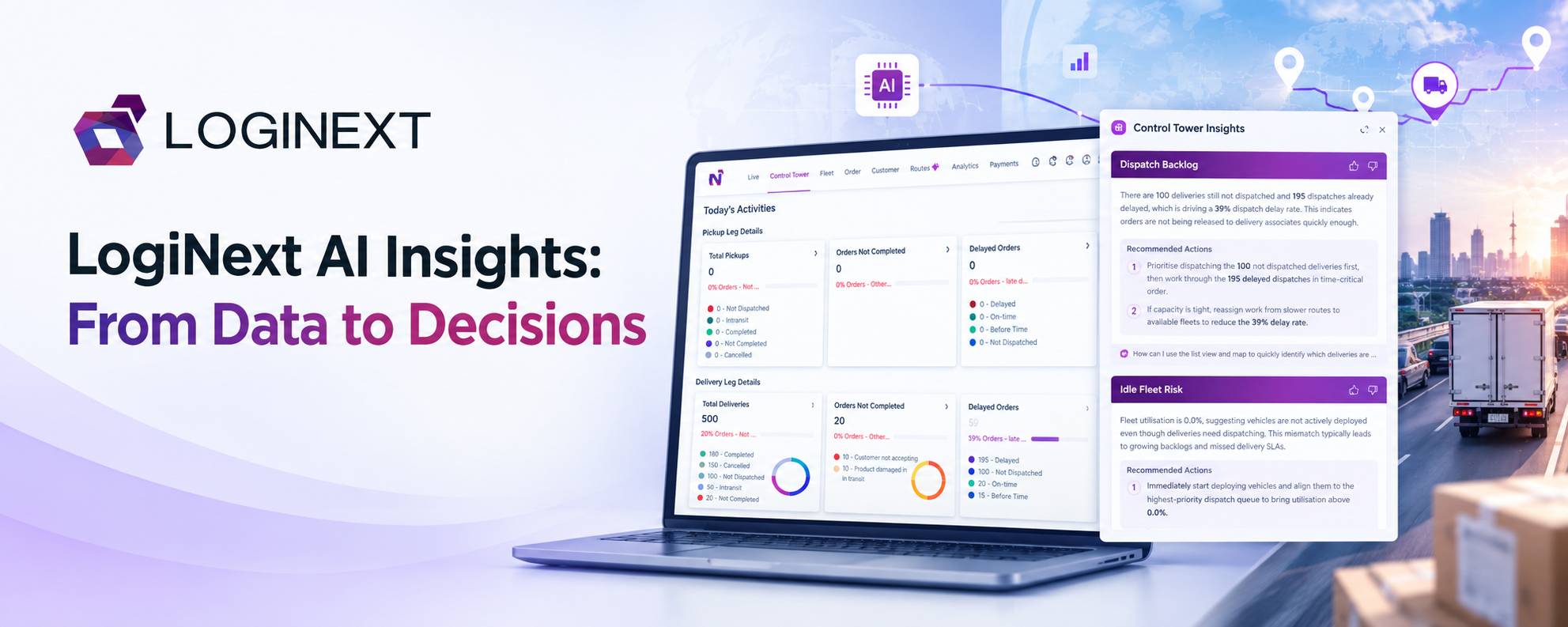
The logistics industry sits on a mountain of data—GPS traces, warehouse scans, customs declarations, carrier invoices, customer delivery windows. Yet most companies still struggle to turn that raw information into timely, profitable decisions. LogiNext AI Insights: From Data to Decisions addresses exactly this gap: an AI-powered platform that ingests fragmented logistics data, applies machine-learning models, and surfaces prescriptive recommendations for routing, demand planning, and network optimization.
Why does this matter now? Global supply chains face volatile fuel prices, labor shortages, tightening sustainability regulations, and customers who expect same-day visibility. In Vietnam—where manufacturing exports are surging and e-commerce fulfillment windows are shrinking—the ability to convert data into action is no longer a competitive advantage; it is a survival requirement. This article explores how LogiNext AI Insights works, the measurable outcomes it delivers, and practical steps logistics leaders can take to embed AI-driven decision-making into daily operations.
Table of Contents
- Understanding LogiNext AI Insights in the Logistics Context
- Key Trends and Data Shaping AI-Driven Logistics
- Operational Impacts on Logistics and Supply Chains
- Practical Lessons for Logistics Professionals
- How Scanwell Logistics Vietnam Can Help
- Conclusion
- Call to Action
- FAQ
Understanding LogiNext AI Insights in the Logistics Context
LogiNext AI Insights is a decision-intelligence layer that sits above existing TMS, WMS, and telematics systems. Instead of replacing core execution systems, it connects to them via APIs, normalizes heterogeneous data streams, and runs three complementary AI engines:
- Route Optimization Engine – consumes historical GPS tracks, live traffic feeds, vehicle profiles, and delivery time-windows to generate least-cost, least-emission routes in seconds.
- Demand Forecasting Engine – blends sales history, promotion calendars, macroeconomic indicators, and weather data to produce SKU-level forecasts up to 12 weeks ahead.
- Real-Time Visibility Engine – aggregates carrier milestone events, IoT sensor readings, and exception alerts into a single control-tower dashboard.
The platform’s differentiator is prescriptive rather than merely descriptive analytics. When a port congestion event delays a feeder vessel, the system doesn’t just flag the delay; it instantly re-optimizes inland truck appointments, suggests alternative cross-dock points, and updates the customer ETA—all before a human planner opens a spreadsheet.
Key Trends and Data Shaping AI-Driven Logistics
Research and early adopter benchmarks highlight several converging trends that make solutions like LogiNext AI Insights timely:
- Cost pressure – Logistics operators report 10–20 % total cost reduction after deploying AI route optimization and demand forecasting, driven by fewer empty kilometers, lower safety stock, and reduced detention charges.
- Sustainability mandates – Route engines that minimize fuel burn directly support Scope 3 emission targets; early users cite 8–15 % CO₂e reductions per shipment.
- Data maturity – Cloud-native TMS adoption in Southeast Asia has crossed the 40 % threshold, creating the structured data pipes AI models need.
- Network complexity – Multi-modal journeys (ocean → CFS → last-mile) now average 7–9 hand-offs; manual coordination no longer scales.
- Customer expectations – B2B buyers now demand consumer-grade tracking; real-time visibility engines close that experience gap.
These trends are not speculative. They are measurable in pilot programs across Vietnam’s key industrial zones—Bắc Ninh, Bình Dương, and Đồng Nai—where manufacturers and 3PLs alike are racing to digitize end-to-end flows.
Operational Impacts on Logistics and Supply Chains
Ocean & Air Freight Forwarding
Forwarders using LogiNext AI Insights gain dynamic slot allocation. The demand engine predicts peak-week container requirements six weeks out, allowing block-space commitments at lower rates. Real-time visibility alerts customs brokers to documentation gaps before the vessel arrives, cutting clearance time by up to 30 %.
Warehousing & Distribution
Forecast-driven replenishment reduces inventory carrying cost 12–18 % while maintaining 98 %+ service levels. The route engine sequences multi-stop milk-runs across Hồ Chí Minh City’s satellite warehouses, trimming fleet size by 1–2 trucks per shift.
Domestic Trucking & Cross-Border
For Vietnam–China and Vietnam–Laos cross-border lanes, the platform factors border-queue forecasts, driver-hour limits, and axle-weight rules into a single optimized plan. Carriers report 15 % higher asset utilization and fewer overweight fines.
Customs & Compliance
Exception-based alerts flag missing COs, incorrect HS codes, or license expirations before cargo reaches the gate. This proactive stance reduces demurrage risk and keeps trusted-trader status intact.
Practical Lessons for Logistics Professionals
- Start with a single high-pain lane. Pilot the route engine on your costliest domestic corridor; quantify fuel and overtime savings before scaling.
- Clean master data first. SKU dimensions, dock door schedules, and vehicle cube utilization must be accurate—garbage in, garbage out applies doubly to ML models.
- Adopt a human-in-the-loop workflow. Let planners accept, modify, or reject AI suggestions; the feedback loop retrains models and builds trust.
- Expose visibility to customers. Share the control-tower link proactively; it reduces inbound “where’s my order” calls by 40 %+.
- Embed sustainability KPIs. Track CO₂e per TEU-km alongside cost per shipment; board-level ESG reporting becomes automatic.
- Integrate, don’t replace. Push optimized routes back to the TMS via API; avoid parallel systems that create data silos.
How Scanwell Logistics Vietnam Can Help
Scanwell Logistics Vietnam combines deep local expertise—customs regulations in Hà Nội, port operations in Cái Mép, last-mile networks in Hồ Chí Minh City—with a technology-first mindset. We help clients evaluate, integrate, and operate AI decision layers like LogiNext AI Insights without disrupting daily operations.
Our approach: assess data readiness, co-design the pilot scope, manage change with your planners and drivers, and scale only after measurable ROI. Because we own the physical assets (trucks, warehouse space, customs licenses) and the digital layer, we close the loop between insight and execution.
- Ocean freight (FCL/LCL on key trade lanes)
- Air freight solutions for time-sensitive cargo
- Warehousing, distribution and value-added services
- Domestic and cross-border trucking
- Customs brokerage and trade compliance support
- AI-enabled visibility & optimization consulting
Conclusion
LogiNext AI Insights demonstrates that the leap from data to decisions is no longer a multi-year IT transformation—it is a focused, measurable initiative that delivers 10–20 % cost savings, lower emissions, and happier customers within quarters. The logistics leaders who act now will lock in structural advantages: leaner networks, resilient inventory, and a digital foundation ready for the next wave of autonomy.
Vietnam’s logistics sector stands at an inflection point. Manufacturers are diversifying supply chains, e-commerce is rewriting last-mile economics, and regulators are tightening green reporting. AI-driven decision intelligence is the lever that turns these pressures into margin. The question is not whether to adopt, but how fast you can operationalize the first pilot.
Call to Action
Ready to turn these logistics insights into real competitive advantages?
Explore Scanwell Logistics Vietnam
Contact our experts for tailored support
FAQ
What data sources does LogiNext AI Insights require?
The platform connects to TMS, WMS, telematics, ERP, and carrier APIs. Minimum viable data: historical GPS tracks, shipment orders with time-windows, and vehicle profiles. Clean master data (SKU dims, dock schedules) accelerates time-to-value.
How long before we see measurable ROI?
Typical pilots on a single corridor or warehouse cluster show fuel and overtime savings within 4–6 weeks. Full network rollout delivers 10–20 % total logistics cost reduction in 2–3 quarters.
Does the solution replace our existing TMS or WMS?
No. LogiNext AI Insights is an overlay decision layer. It reads from and writes back to your execution systems via standard APIs, preserving current workflows while adding prescriptive intelligence.
How does Scanwell support implementation in Vietnam?
We run a structured assessment: data readiness audit, pilot lane selection, change-management workshops for planners/drivers, and KPI dashboards. Our local ops team ensures the AI outputs are executable on Vietnamese roads, ports, and customs processes.
Can the platform help with ESG reporting?
Yes. The route engine outputs CO₂e per shipment, mode, and lane. These granular emissions feed directly into Scope 3 reports and customer carbon dashboards, eliminating manual spreadsheet work.