



















LogiNext Exception Management: From Issue to Resolution
Estimated reading time: 8 minutes
Table of Contents
- Understanding Exception Management in Modern Logistics
- Key Trends and Data Shaping Exception Management
- Operational Impacts on Logistics and Supply Chains
- Practical Lessons for Logistics Professionals
- How Scanwell Logistics Vietnam Can Help
- Conclusion
- FAQ
Understanding Exception Management in Modern Logistics
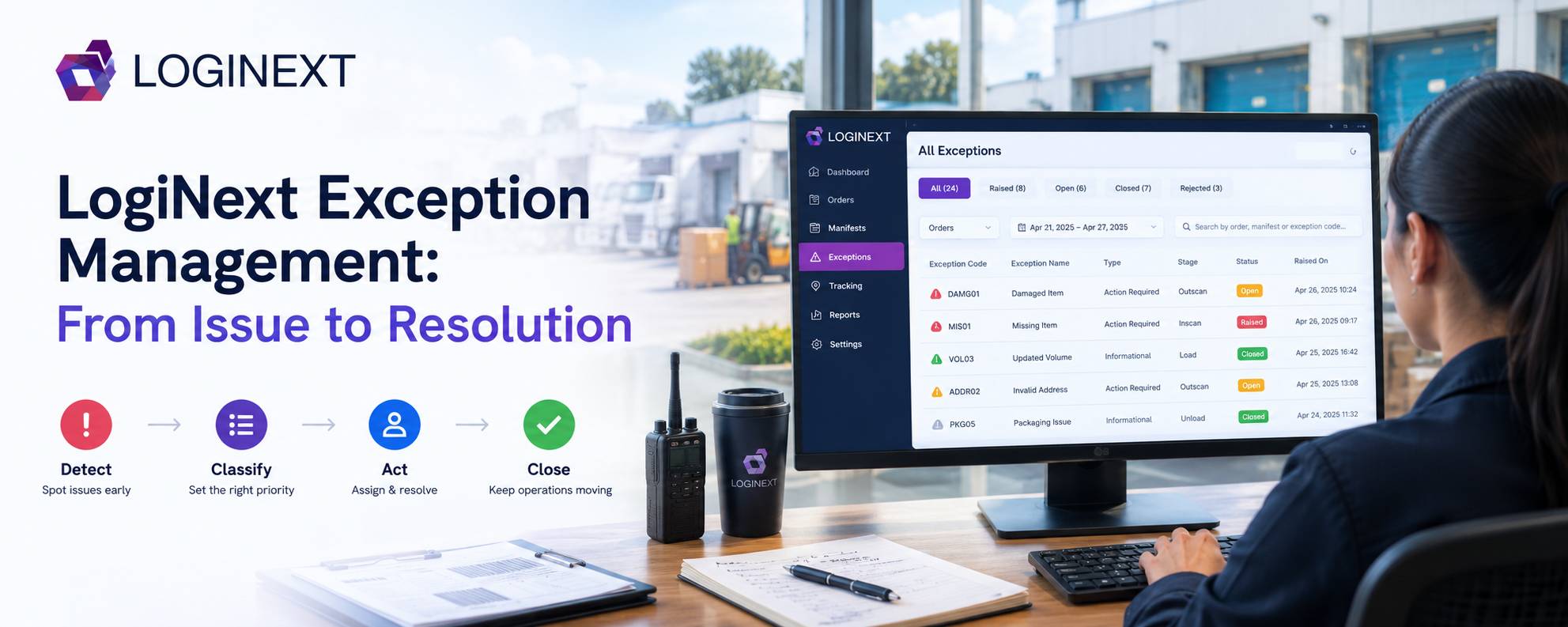
Exception management has become a critical capability for logistics operators navigating increasingly complex global supply chains. At its core, exception management refers to the systematic process of identifying, classifying, prioritizing, and resolving deviations from planned operations — whether those deviations involve delayed shipments, documentation errors, capacity constraints, customs holds, or unexpected demand fluctuations. The LogiNext platform has emerged as a notable technology solution in this space, offering automated exception detection, real-time alerting, and resolution workflows that help logistics teams move from reactive firefighting to proactive control.
For logistics leaders in Vietnam and across Southeast Asia, the stakes are particularly high. The region’s position as a manufacturing hub, combined with growing e-commerce volumes and evolving trade agreements like CPTPP and RCEP, means that even small operational disruptions can cascade into significant cost overruns and service failures. Effective exception management is no longer a nice-to-have feature — it is a strategic differentiator that separates resilient supply chains from fragile ones.
Key Trends and Data Shaping Exception Management
The logistics industry is experiencing several converging trends that amplify the need for robust exception management capabilities:
- Rising shipment complexity: Multi-modal journeys involving ocean, air, and road segments create more touchpoints where exceptions can occur. A single shipment may change hands 8-12 times from origin factory to final destination.
- Capacity volatility: Container shortages, blank sailings, and air cargo belly-capacity fluctuations have made schedule reliability a moving target. Carriers’ on-time performance has swung from 35% to 65% within 18-month cycles.
- Data proliferation without integration: TMS, WMS, carrier portals, customs systems, and IoT devices generate massive data streams, but siloed systems prevent unified visibility. Exception signals often exist in the data but go unnoticed until downstream impacts materialize.
- Regulatory intensity: New customs filing requirements (ICS2 in EU, ACE in US, Vietnam’s VNACCS/VCIS upgrades), sanctions screening, and sustainability reporting (CBAM, CSRD) add compliance-related exception categories that didn’t exist five years ago.
- Customer expectations: B2B buyers now demand B2C-grade tracking transparency. “Where is my order?” inquiries that once took hours to resolve must now be answered in seconds.
Technology platforms like LogiNext address these trends through AI-driven anomaly detection that correlates data across systems, predictive ETAs that account for real-world constraints, and automated resolution workflows that route exceptions to the right stakeholders with context.
Operational Impacts on Logistics and Supply Chains
When exception management is immature, the operational impacts compound across multiple dimensions:
Cost Escalation
Unmanaged exceptions drive direct costs — demurrage and detention charges, expedited freight premiums, inventory carrying costs from safety stock buffers, and labor hours spent on manual investigation. Industry benchmarks suggest that companies with reactive exception handling spend 15-25% more on logistics per unit shipped compared to peers with mature exception management.
Service Degradation
Late exception detection means late customer communication. When a shipment deviation is discovered only at the destination port, the options for recovery are limited and expensive. Proactive exception management enables earlier interventions: rerouting, mode shifting, or inventory reallocation before the impact reaches the end customer.
Compliance Risk
Documentation exceptions — missing certificates, incorrect HS codes, valuation discrepancies — can trigger customs holds, penalties, or even seizure of goods. In Vietnam’s evolving regulatory environment, where customs procedures are digitizing rapidly, documentation accuracy is a moving target that requires continuous monitoring.
Team Burnout
Operations teams trapped in constant firefighting mode experience higher turnover. Exception management automation doesn’t just save money; it preserves institutional knowledge by freeing experienced staff to handle genuinely complex cases rather than routine data-chasing.
Practical Lessons for Logistics Professionals
- Standardize exception taxonomy: Define clear categories (carrier delay, documentation error, capacity shortage, customs hold, weather, demand spike) with severity levels (critical, high, medium, low) and SLAs for each. This enables consistent prioritization and meaningful trend analysis.
- Build buffer intelligence, not just buffer stock: Use exception history to model probabilistic lead times by lane, mode, and season. Dynamic safety stock calculations that reflect actual variability outperform static rules.
- Automate the routine, escalate the complex: Configure rules to auto-resolve common exceptions (e.g., carrier ETA updates within tolerance, routine documentation releases) while routing anomalies requiring human judgment to specialists with full context.
- Close the loop with customers: Exception management isn’t complete until the stakeholder is informed. Automated, branded notifications with revised ETAs and mitigation actions build trust and reduce inbound inquiry volume.
- Measure exception management performance: Track mean time to detect (MTTD), mean time to resolve (MTTR), exception recurrence rate, and cost per exception. These metrics turn exception management into a continuous improvement engine.
- Collaborate with carriers and partners on root causes: Share exception analytics with key carriers and origin agents. Joint problem-solving on recurring issues (e.g., chronic documentation errors from a specific supplier) yields compounding benefits.
How Scanwell Logistics Vietnam Can Help
Scanwell Logistics Vietnam combines deep local expertise with global network capabilities to help clients build resilient exception management into their supply chains. Our approach integrates technology-enabled visibility, experienced operations teams, and established carrier relationships to detect exceptions early and execute resolutions quickly.
We understand Vietnam’s unique logistics landscape — from Cat Lai port congestion patterns to northern border crossing procedures, from HCMC warehouse capacity cycles to the regulatory nuances of importing into Vietnam’s key export markets. This local knowledge, amplified by digital tools, allows us to anticipate and mitigate exceptions that pure technology platforms might miss.
- Ocean freight (FCL/LCL) on key trade lanes with proactive vessel tracking and terminal appointment management
- Air freight solutions for time-sensitive cargo with priority handling and customs pre-clearance
- Warehousing, distribution, and value-added services (kitting, labeling, quality inspection) across Vietnam
- Domestic and cross-border trucking with real-time GPS visibility and exception alerting
- Customs brokerage and trade compliance support for Vietnam and major destination markets
- Technology-enabled supply chain visibility platform with exception dashboards and analytics
Conclusion
Exception management sits at the intersection of technology, process, and people. Platforms like LogiNext provide the digital backbone — automated detection, correlation, and workflow — but the real value emerges when technology is paired with clear taxonomy, defined SLAs, skilled teams, and a culture of continuous improvement. For logistics leaders in Vietnam, the opportunity is clear: invest in exception management maturity now to build supply chains that don’t just survive disruptions but adapt faster than competitors.
The path forward involves assessing current exception handling maturity, identifying the highest-impact exception categories, piloting automation on routine cases, and scaling based on measured results. Whether the starting point is a spreadsheet-based tracker or a fragmented set of carrier portals, incremental progress compounds into strategic advantage.
Call to Action
Ready to turn these logistics insights into real competitive advantages?
Explore Scanwell Logistics Vietnam
Contact our experts for tailored support
FAQ
What is the difference between exception management and standard shipment tracking?
Standard tracking provides location and status updates. Exception management adds intelligence: it automatically detects when actual status deviates from plan, classifies the deviation by type and severity, triggers the appropriate resolution workflow, and measures resolution performance. Tracking tells you “where”; exception management tells you “what’s wrong, how bad, and what to do.”
How do we calculate the ROI of investing in exception management technology?
Start by quantifying current exception costs: demurrage/detention spend, expedited freight premiums, labor hours on manual tracking, inventory carrying costs from excess buffers, and lost revenue from service failures. Pilot exception automation on your top 3 exception categories by cost. Measure reduction in MTTD, MTTR, and cost per exception. Most companies see positive ROI within 6-12 months on high-volume lanes.
Can exception management work without a full TMS implementation?
Yes. Many organizations start with a focused exception management layer that integrates with existing systems via API or EDI — pulling data from carrier portals, customs systems, and internal ERPs. This “overlay” approach delivers quick wins while building the data foundation for broader digital transformation. The key is defining clear exception taxonomy and resolution workflows first, then selecting technology that supports them.
What role does Vietnam’s customs modernization play in exception management?
Vietnam’s transition to VNACCS/VCIS and adoption of ASEAN Single Window standards means customs-related exceptions (documentation errors, classification disputes, valuation queries) are increasingly visible in digital systems — but also resolved faster when data is structured correctly. Logistics partners with deep Vietnam customs expertise can pre-validate declarations, manage post-clearance audits proactively, and reduce customs-hold exceptions significantly.
How should we prioritize which exceptions to automate first?
Use a 2×2 matrix: frequency (high/low) vs. complexity (high/low). Start with high-frequency, low-complexity exceptions — these are routine cases like carrier ETA changes within tolerance, routine document releases, or standard appointment confirmations. Automating these frees team capacity for high-complexity exceptions (multi-party disputes, force majeure rerouting, novel regulatory issues) where human judgment creates the most value.