
















How Delivery Driver Apps Work: Choosing the Right Driver Management Platform for Smarter Deliveries
Estimated reading time: 9 minutes
In the fast-paced world of modern logistics, the “last mile” has become the most critical frontier for operational excellence. As customer expectations for speed and transparency skyrocket, logistics providers and supply chain managers are turning to technology to bridge the gap between the warehouse and the doorstep. Understanding How Delivery Driver Apps Work is no longer just a technical curiosity; it is a strategic necessity for any business looking to stay competitive in the global and Vietnamese markets.
A robust driver management platform acts as the central nervous system for transportation operations. By digitizing workflows that were once managed with clipboards and phone calls, these platforms streamline dispatch, improve visibility, and significantly boost driver productivity. For decision-makers in Vietnam’s rapidly evolving logistics sector, choosing the right driver management platform for smarter deliveries can mean the difference between a fragmented supply chain and a high-performance delivery network.
In this comprehensive guide, we will explore the inner workings of delivery driver applications, the data-driven trends shaping their evolution, and the practical steps your organization can take to implement a solution that drives efficiency and customer satisfaction.
Table of Contents
- The Mechanics: How Delivery Driver Apps Work
- Key Features of a Modern Driver Management Platform
- Trends Shaping Smarter Deliveries in 2024 and Beyond
- Impacts on Logistics Efficiency and Productivity
- Practical Lessons for Choosing the Right Platform
- How Scanwell Logistics Vietnam Can Help
- Conclusion
- FAQ
The Mechanics: How Delivery Driver Apps Work
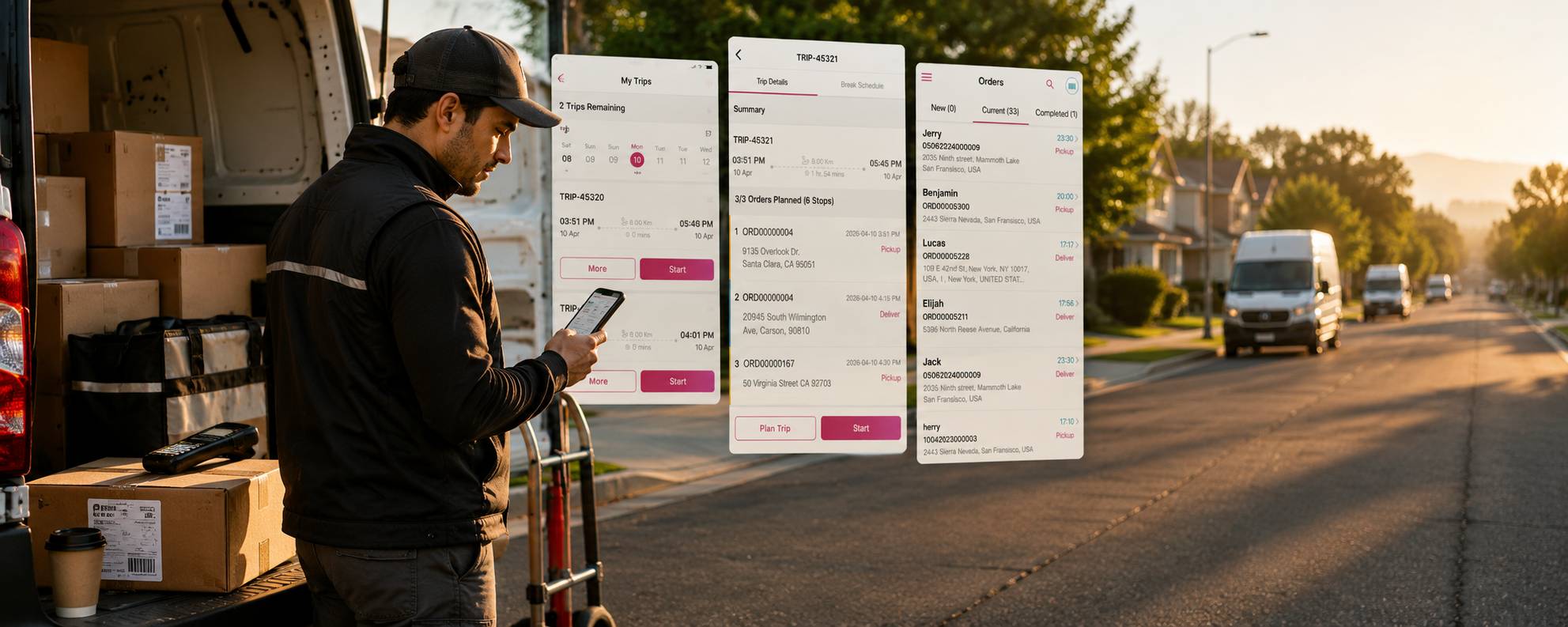
At its core, a delivery driver app is a mobile interface that connects an individual driver to a centralized cloud-based dispatcher. While it looks like a simple list of tasks to the driver, the backend is a sophisticated engine of data exchange. How delivery driver apps work involves three primary layers: the Cloud Server (The Brain), the Dispatcher Dashboard (The Control Tower), and the Driver Mobile App (The Execution).
When an order is placed or a shipment is ready for transport, the system automatically assigns the task based on proximity, vehicle capacity, and driver availability. This process is known as automated dispatching. Once the driver accepts the task on their smartphone, the app provides turn-by-turn navigation, shipment details, and special handling instructions.
The app uses GPS sensors to relay the vehicle’s position in real-time. This creates a “geofence” around delivery locations; as soon as a driver enters the predefined radius, the system can automatically notify the customer or update the status to “Arrived.” This automation reduces the administrative burden on the driver, allowing them to focus entirely on the road and the physical delivery.
Key Features of a Modern Driver Management Platform
To achieve smarter deliveries, a platform must go beyond simple GPS tracking. It needs to provide a suite of tools that address the specific pain points of logistics operations.
Dynamic Route Optimization
One of the most valuable features is the ability to recalculate routes in real-time. Traffic congestion in hubs like Ho Chi Minh City or Hanoi can change in minutes. A smart platform uses historical data and live traffic feeds to sequence stops in the most efficient order, saving fuel and time.
Electronic Proof of Delivery (ePOD)
Gone are the days of lost paper manifests. Modern apps allow drivers to capture digital signatures, take photos of delivered goods, or scan barcodes. This data is instantly uploaded to the central system, providing immediate confirmation to both the logistics provider and the end customer.
- Real-time Tracking: Offers customers a live view of their shipment, reducing “Where is my order?” (WISMO) inquiries.
- In-App Communication: Allows drivers to message dispatchers or customers without leaving the secure app environment.
- Performance Analytics: Tracks KPIs such as on-time delivery rates, idle time, and average service time per stop.
Trends Shaping Smarter Deliveries in 2024 and Beyond
The logistics landscape is shifting toward hyper-connectivity and predictive intelligence. Choosing the right driver management platform requires an understanding of where the industry is headed.
Artificial Intelligence and Machine Learning: AI is being used to predict delivery windows more accurately by analyzing months of driver performance data and seasonal traffic patterns. This leads to higher “First-Time Delivery” success rates, which is a major cost-saver in the industry.
Sustainability and Green Logistics: With global pressure to reduce carbon footprints, driver apps are now including “eco-routing” features. These prioritize routes that minimize fuel consumption and monitor driver behavior (like excessive idling or harsh braking) to promote greener driving habits.
Integration with Global Supply Chains: In Vietnam, as a manufacturing powerhouse, domestic delivery is often the final leg of an international journey. Platforms that can integrate with global Freight Management Systems (FMS) allow for seamless end-to-end visibility from a factory in Binh Duong to a warehouse in Europe or the US.
Impacts on Logistics Efficiency and Productivity
Implementing a high-quality driver management platform has a ripple effect across the entire supply chain. It doesn’t just help the driver; it transforms the business model.
First, it improves visibility for all stakeholders. When a logistics manager can see the entire fleet on a single map, they can make better decisions about resource allocation. If one truck is delayed, another can be rerouted to pick up the slack, preventing a total breakdown in service.
Second, these tools boost driver productivity. By removing the need for manual data entry and providing the best routes, drivers can often complete 15-20% more deliveries per shift. In a labor-constrained market, maximizing the output of every driver is essential for scaling operations without exponentially increasing costs.
Finally, the “smarter” delivery process enhances customer trust. In the B2B sector, knowing exactly when a raw material shipment will arrive at a factory allows for better production planning. In the B2C sector, it creates the “Amazon-like” experience that modern consumers now demand.
Practical Lessons for Choosing the Right Platform
Selecting a platform is a long-term investment. Here are the practical factors logistics professionals should consider:
- Scalability and Integration: Ensure the platform can “talk” to your existing ERP or Warehouse Management System (WMS). A siloed app is a liability.
- User Interface (UI) for Drivers: If the app is too complex, drivers will find “workarounds” or ignore it. The best apps require minimal taps to complete a task.
- Offline Functionality: In areas with spotty 4G/5G coverage, the app must be able to store data locally and sync automatically once a connection is restored.
- Total Cost of Ownership (TCO): Look beyond the monthly subscription fee. Consider the costs of training, hardware (tablets/phones), and data plans.
How Scanwell Logistics Vietnam Can Help
At Scanwell Logistics Vietnam, we understand that technology is the backbone of modern freight forwarding. We don’t just move cargo; we manage information. By leveraging advanced logistics technology and a deep understanding of the local infrastructure, we help our partners navigate the complexities of smarter deliveries across Vietnam and the globe.
Whether you are looking for domestic distribution that requires high-visibility driver tracking or an end-to-end international solution, our team integrates the latest tools to ensure your cargo is handled with precision. Our services include:
- Domestic Trucking: Reliable distribution with real-time tracking and professional driver management.
- Ocean Freight: Comprehensive FCL and LCL services connecting Vietnam to major global ports.
- Air Freight: Rapid transport for high-value or time-sensitive goods.
- Warehousing: Smart storage solutions that integrate seamlessly with our distribution network.
- Customs Brokerage: Expert navigation of Vietnamese trade regulations to keep your supply chain moving.
Conclusion
The evolution of how delivery driver apps work reflects a larger shift in the logistics industry: the move from reactive to proactive management. By choosing the right driver management platform, businesses can unlock new levels of efficiency, reduce operational waste, and provide the transparency that today’s market demands.
As we have seen, the benefits of these platforms extend far beyond the driver’s seat. They streamline dispatch, improve visibility, and boost driver productivity, creating a more resilient and responsive supply chain. For logistics leaders in Vietnam, the time to embrace these “smarter deliveries” is now. Partnering with a tech-forward logistics provider like Scanwell Logistics ensures that your business stays at the forefront of this digital transformation.
Call to Action
Ready to turn these logistics insights into real competitive advantages?
Explore Scanwell Logistics Vietnam
Contact our experts for tailored support
FAQ
How does a driver management platform improve customer satisfaction?
By providing real-time tracking links and accurate Estimated Time of Arrival (ETA) updates, customers feel in control of their delivery. Furthermore, electronic proof of delivery (ePOD) provides instant peace of mind that the goods have been received safely.
Can these apps work for both small fleets and large logistics providers?
Yes. Most modern platforms are SaaS-based (Software as a Service), meaning they are scalable. Small businesses can start with basic tracking, while larger enterprises can integrate complex AI-driven routing and advanced analytics.
What is the biggest challenge in implementing a delivery driver app?
The primary challenge is often “change management”—getting drivers to adopt new technology. Choosing a platform with a user-friendly interface and providing proper training is essential for a successful rollout. Working with an experienced partner like Scanwell Logistics Vietnam can help bridge this gap through best practices and proven operational models.