












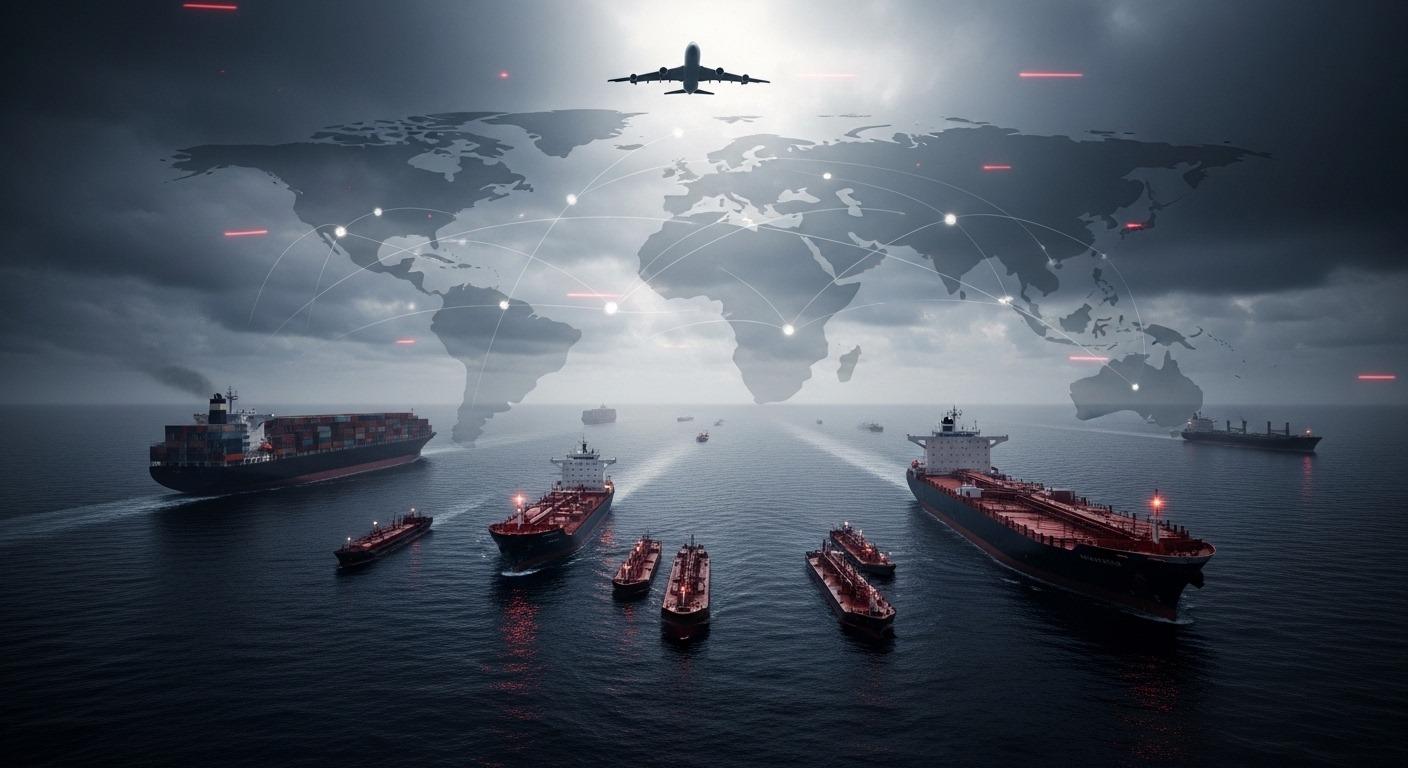
How the US-Iran War Is Driving Up Ocean, Air, and Tanker Freight Rates
Estimated reading time: 9 minutes
In the complex machinery of global trade, the Middle East serves as one of the most critical gears. When geopolitical tensions escalate into active conflict, the vibrations are felt across every supply chain on the planet. Currently, the industry is closely monitoring how the US-Iran War is driving up ocean, air, and tanker freight rates, creating a high-stakes environment for shippers, manufacturers, and logistics providers alike.
For businesses operating out of manufacturing hubs like Vietnam, these regional instabilities are not just distant news headlines; they represent tangible increases in landed costs and significant disruptions to lead times. From the Strait of Hormuz to the Suez Canal, the security of maritime passages is under constant threat, forcing the logistics industry to adapt to a “new normal” of volatility. This article explores the mechanisms behind these rate hikes and offers insights into how supply chain leaders can navigate this turbulent landscape.
Table of Contents
- The Geopolitical Context: Why This Region Matters
- Ocean Freight: Rerouting and Risk Surcharges
- Tanker Rates and the Energy Logistics Crisis
- The Air Freight Surge: Speed at a Premium
- Practical Lessons for Logistics Professionals
- How Scanwell Logistics Vietnam Can Help
- Conclusion
- FAQ
The Geopolitical Context: Why This Region Matters
The Middle East is home to some of the world’s most vital maritime “chokepoints.” The Strait of Hormuz, a narrow waterway between Oman and Iran, sees nearly one-fifth of the world’s total oil consumption pass through it daily. Any threat of a US-Iran War immediately places this artery at risk. When military tensions rise, shipping lines and tanker operators must account for the possibility of seizures, drone attacks, or full blockades.
Furthermore, the proximity of these tensions to the Red Sea and the Suez Canal—the primary gateway for trade between Asia and Europe—means that any instability involving regional actors can disrupt the flow of containerized cargo. For a country like Vietnam, which relies heavily on exporting garments, electronics, and furniture to Western markets, the stability of these routes is paramount to maintaining competitive pricing.
Ocean Freight: Rerouting and Risk Surcharges
The most immediate way the US-Iran War is driving up ocean freight rates is through the physical rerouting of vessels. When corridors like the Red Sea become high-risk zones, many carriers opt to bypass the Suez Canal entirely, choosing the longer route around the Cape of Good Hope in Africa.
The Cost of Distance
Rerouting around Africa adds approximately 3,000 to 3,500 nautical miles to a one-way trip between Asia and Northern Europe. This extension results in:
- Increased Fuel Consumption: Longer distances require significantly more bunker fuel, the cost of which is often passed to shippers via Bunker Adjustment Factors (BAF).
- Extended Transit Times: Shipping schedules are delayed by 10 to 14 days, leading to equipment imbalances as containers take longer to return to Asian ports.
- Capacity Constraints: Because ships are tied up for longer on a single voyage, the effective global shipping capacity is reduced, naturally driving up spot rates.
Tanker Rates and the Energy Logistics Crisis
While container ships carry consumer goods, tankers carry the lifeblood of the global economy: oil and gas. The threat of conflict directly impacts tanker freight rates through two primary mechanisms: insurance and security.
Insurance companies categorize high-conflict zones as “Listed Areas.” Ships entering these waters must pay “War Risk” premiums. These premiums can skyrocket from a negligible percentage of the ship’s value to significant sums in a matter of days. For Very Large Crude Carriers (VLCCs), these costs are often measured in hundreds of thousands of dollars per voyage.
Additionally, the volatility in oil prices caused by the fear of supply disruptions in the Middle East leads to higher operational costs for all modes of transport. When the price of crude rises, every logistics provider—from domestic truckers in Vietnam to international airlines—must adjust their surcharges to remain profitable.
The Air Freight Surge: Speed at a Premium
As ocean freight becomes less reliable and more expensive, many shippers are forced to migrate their most urgent cargo to the skies. This “modal shift” is a secondary reason why the US-Iran War is driving up air freight rates.
- Inventory Stockouts: Companies facing two-week delays in ocean transit often use air freight to “fill the gap” and prevent empty shelves or stalled production lines.
- Restricted Airspace: Conflict often leads to the closure of certain flight corridors. Rerouting aircraft to avoid dangerous airspace increases flight times and fuel burn, similar to the challenges faced by ocean vessels.
- Demand Spikes: High-value electronics and seasonal fashion items from Vietnam are particularly susceptible to this shift, as the cost of air freight is weighed against the risk of missing a market window.
Practical Lessons for Logistics Professionals
Navigating geopolitical volatility requires a proactive rather than a reactive strategy. Based on current trends, here are several best practices for supply chain managers:
- Diversify Trade Routes: Do not rely on a single gateway. Explore multi-modal options, such as Sea-Air combinations via hubs like Dubai or Singapore, to balance cost and speed.
- Buffer Your Budgets: When planning annual logistics spends, include a “volatility contingency.” Freight rates can double or triple within weeks during an active conflict.
- Enhance Visibility: Use real-time tracking tools to monitor the exact location of your cargo. Knowing exactly where a shipment is allows for better communication with end customers when delays occur.
- Strengthen Forwarder Partnerships: In times of crisis, space is allocated to those with the strongest relationships. Work closely with a partner like Scanwell Logistics who has the local presence and global network to secure capacity.
How Scanwell Logistics Vietnam Can Help
At Scanwell Logistics Vietnam, we understand that global instability creates local challenges. Our team is dedicated to providing resilient logistics solutions that help our clients mitigate the risks associated with regional conflicts and fluctuating freight rates. With our deep roots in the Asia-Pacific region and an extensive global network, we offer the agility needed to bypass bottlenecks.
Whether you are dealing with the impacts of rerouted ocean vessels or the sudden need for air cargo capacity, Scanwell provides the expertise to keep your supply chain moving.
- Ocean Freight: Flexible FCL/LCL solutions with access to multiple carrier contracts to ensure space even when routes are disrupted.
- Air Freight: Express and deferred air solutions for time-sensitive cargo leaving Vietnam for global markets.
- Warehousing & Distribution: Strategic storage solutions to help you maintain safety stock and manage inventory during transit delays.
- Customs Brokerage: Ensuring compliance and smooth clearance to prevent any further delays at the destination.
Conclusion
The geopolitical landscape remains a primary driver of logistics costs in the modern era. As we have seen, the ways in which the US-Iran War is driving up ocean, air, and tanker freight rates are interconnected—affecting fuel prices, insurance premiums, and global vessel capacity. For businesses in Vietnam, the key to survival is resilience and adaptability.
While we cannot control global politics, we can control how we prepare for their impact. By diversifying routes, embracing technology, and partnering with experienced logistics providers, companies can protect their margins and ensure that their goods reach their destination, regardless of the challenges in the Middle East.
Call to Action
Ready to turn these logistics insights into real competitive advantages?
Explore Scanwell Logistics Vietnam
Contact our experts for tailored support
FAQ
Why does a conflict in the Middle East affect Vietnam’s exports?
Most of Vietnam’s exports to Europe and the US East Coast pass through the Suez Canal. If this route is threatened or becomes too expensive due to war risk insurance, carriers reroute ships, leading to higher costs and longer delays for Vietnamese goods.
What is a “War Risk Surcharge”?
It is an additional fee applied by carriers to cover the significantly higher insurance premiums they must pay to operate in or near conflict zones. These charges are usually passed directly to the shipper.
Can air freight really replace ocean freight during a crisis?
While air freight cannot handle the total volume of ocean freight, it serves as a vital emergency valve. Shippers often use it for high-value or time-critical components to keep production lines running when ships are delayed by weeks.
How does Scanwell help manage these rising costs?
Scanwell leverages its global relationships to find the most cost-effective routing and capacity. By providing real-time data and alternative transport modes, we help clients avoid the most expensive “spot” market traps and plan their logistics more predictably.