










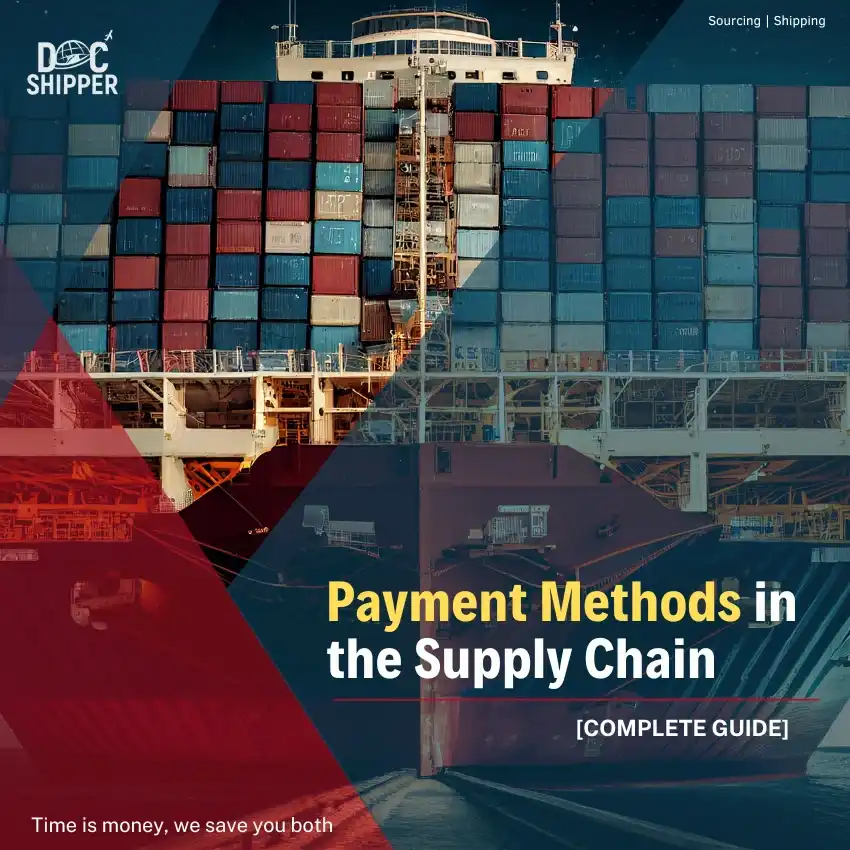
Payment Methods in the Supply Chain [COMPLETE GUIDE]
Estimated reading time: 9 minutes
In the fast-paced world of global logistics, the movement of physical goods often takes center stage. However, behind every container moved across the ocean or every package delivered to a doorstep lies a sophisticated financial network. Payment Methods in the Supply Chain [COMPLETE GUIDE] explores the critical “financial layer” of logistics, where the speed and security of transactions are just as vital as the transit time of a vessel. Without a robust payment strategy, supply chains can grind to a halt, regardless of how efficient the physical infrastructure may be.
For business leaders and supply chain managers in Vietnam and abroad, understanding the nuances of how money moves between suppliers, carriers, and customers is essential. As global trade becomes increasingly complex, companies must navigate a landscape of traditional bank transfers, emerging digital platforms, and rigorous regulatory requirements. This guide provides a deep dive into the current payment ecosystem, the benefits of modernizing your financial operations, and how to mitigate the risks associated with international trade transactions.
Table of Contents
- The Critical Role of Payments in Logistics
- Standard Payment Methods in the Supply Chain
- The Strategic Benefits of Efficient Payment Systems
- Challenges: Security, Fees, and Compliance
- Practical Lessons for Logistics Professionals
- How Scanwell Logistics Vietnam Can Help
- Conclusion
- FAQ
The Critical Role of Payments in Logistics
The supply chain is often visualized as a linear flow of raw materials turning into finished products. In reality, it is a dual-flow system: the physical flow of goods moving forward and the financial flow of payments moving backward. When we discuss Payment Methods in the Supply Chain [COMPLETE GUIDE], we are looking at the mechanism that fuels the entire operation. A delay in payment can lead to held shipments, strained supplier relationships, and significant bottlenecks in production.
In the context of Vietnam’s growing role as a global manufacturing hub, the efficiency of these payments has become a competitive advantage. Companies that can process payments quickly and securely are often preferred by top-tier suppliers. Furthermore, as businesses move toward “just-in-time” inventory models, the financial transaction must be as agile as the logistics provider delivering the cargo.
Standard Payment Methods in the Supply Chain
Modern supply chains utilize a variety of payment methods, each suited to different transaction sizes, geographical locations, and levels of trust between parties. Understanding these options is the first step in optimizing your financial logistics.
Traditional and Digital Transfer Methods
- Bank Transfers (Wire Transfers): This remains the backbone of large-scale international trade. Transfers involve direct movement of funds between banks and are frequently used for high-value transactions between manufacturers and freight forwarders.
- Credit and Debit Cards: While less common for bulk industrial orders, credit cards are a staple for online logistics platforms and small-to-medium enterprise (SME) transactions. They offer immediate processing and are widely accepted globally.
- Online Payment Platforms: Providers like PayPal, Stripe, and Square have revolutionized the way businesses handle smaller or more frequent transactions. These platforms offer an additional layer of security and efficiency, particularly for e-commerce-driven supply chains.
- Cash: Although declining in many developed markets, cash is still utilized in specific industries or regions where electronic infrastructure may be less robust. However, its use in modern international logistics is increasingly rare due to security and reporting requirements.
The Strategic Benefits of Efficient Payment Systems
Transitioning from manual, paper-based payment processes to automated, digital systems is not just about convenience—it is a strategic necessity. The benefits of optimizing Payment Methods in the Supply Chain [COMPLETE GUIDE] extend across the entire balance sheet.
One of the most immediate impacts is the reduction of operational costs. Manual processing is prone to human error, which can lead to costly delays or duplicate payments. By automating these workflows, companies can minimize overhead and ensure that staff time is spent on higher-value supply chain analysis rather than data entry.
Furthermore, efficient systems lead to improved cash flow management. Real-time visibility into payment statuses allows supply chain managers to predict liquidity needs more accurately. When payments to carriers and suppliers are timely, it builds trust and can lead to more favorable credit terms in the future.
Finally, there is the aspect of increased security and customer experience. Secure payment gateways protect the business from the devastating effects of data breaches and fraud. Simultaneously, offering a variety of streamlined payment options to customers enhances their satisfaction and fosters long-term loyalty, which is critical in the competitive logistics industry.
Challenges: Security, Fees, and Compliance
Despite the clear advantages of modern systems, several hurdles remain for businesses looking to optimize their supply chain payments.
- Processing Fees: Every transaction through a bank or a digital platform incurs a cost. For businesses operating on thin margins, such as high-volume freight forwarding or distribution, these fees can accumulate into a significant expense.
- Security Risks: As transactions move online, they become targets for sophisticated cyber-attacks. A single breach in payment data can lead to massive financial losses and irreversible damage to a company’s reputation.
- Regulatory Compliance: Navigating the legal landscape is perhaps the most complex challenge. Businesses must adhere to Anti-Money Laundering (AML) and Know-Your-Customer (KYC) regulations. These requirements are strictly enforced to prevent illicit activities but can add layers of bureaucracy to international transactions.
To address these challenges, forward-thinking companies are exploring blockchain technology and digital wallets. These innovations promise enhanced security through decentralized ledgers and faster settlement times, potentially bypassing some of the traditional friction points in global finance.
Practical Lessons for Logistics Professionals
To effectively manage Payment Methods in the Supply Chain [COMPLETE GUIDE], logistics and supply chain professionals should consider the following best practices:
- Align Payments with Transit Milestones: Whenever possible, link your payment releases to verifiable logistics milestones (e.g., Bill of Lading issuance or delivery confirmation) to maintain a healthy balance of risk.
- Consolidate Warehouse Billing: Work with partners who offer consolidated invoicing for warehousing and distribution to reduce the number of individual transactions and associated processing fees.
- Invest in Automation: Transition away from manual checks and paper invoices. Digital automation tools can sync directly with your ERP (Enterprise Resource Planning) system to ensure accuracy.
- Communicate Early on Terms: Clear communication regarding payment terms and methods should happen at the contract stage, not when the invoice is due. This prevents disputes and shipment delays.
How Scanwell Logistics Vietnam Can Help
At Scanwell Logistics Vietnam, we understand that moving your cargo is only half the battle. Efficiently managing the documentation and financial flows that accompany your shipments is equally critical to your business success. Our local expertise combined with a global network allows us to provide seamless logistics solutions where the physical and financial aspects work in perfect harmony.
We leverage advanced technology to provide transparency throughout the shipping process, ensuring that you have the data needed to trigger payments and manage your cash flow effectively. Whether you are dealing with complex customs brokerage requirements or urgent air freight, Scanwell is your trusted partner in Vietnam.
- Ocean Freight: Reliable FCL and LCL services with clear billing and documentation.
- Air Freight: Rapid solutions for time-sensitive cargo with streamlined processing.
- Warehousing: Comprehensive distribution services that simplify your inventory finances.
- Customs Brokerage: Expert guidance on compliance and duty payments to avoid costly delays.
Conclusion
Mastering Payment Methods in the Supply Chain [COMPLETE GUIDE] is about more than just choosing between a bank transfer or a credit card. It is about building a financial architecture that supports growth, reduces risk, and enhances the efficiency of your global operations. In a world where supply chain disruptions are the new normal, having a secure and agile payment system is a powerful tool for resilience.
By staying informed about emerging technologies like blockchain and staying diligent about regulatory compliance, logistics leaders can turn their financial operations into a source of competitive strength. Remember, the most successful supply chains are those where the money moves as smoothly as the goods.
Call to Action
Ready to turn these logistics insights into real competitive advantages?
Explore Scanwell Logistics Vietnam
Contact our experts for tailored support
FAQ
What are the most common payment methods in international supply chains?
Bank transfers (wire transfers) remain the most common for high-value B2B trade. However, online payment platforms and credit cards are increasingly used for smaller transactions and e-commerce logistics.
How does payment automation improve the supply chain?
Automation reduces manual entry errors, lowers processing costs, and provides real-time visibility into cash flow, which helps prevent shipment delays caused by payment disputes.
What are AML and KYC, and why do they matter?
Anti-Money Laundering (AML) and Know-Your-Customer (KYC) are regulations that businesses must follow to verify the identity of their partners and prevent illegal financial activities. Compliance is mandatory for international trade.
How can Scanwell Logistics help with payment-related logistics issues?
Scanwell provides integrated logistics and documentation services that ensure your financial milestones (like receiving a Bill of Lading) are synchronized with your physical cargo movement, reducing the risk of friction in your supply chain.