


















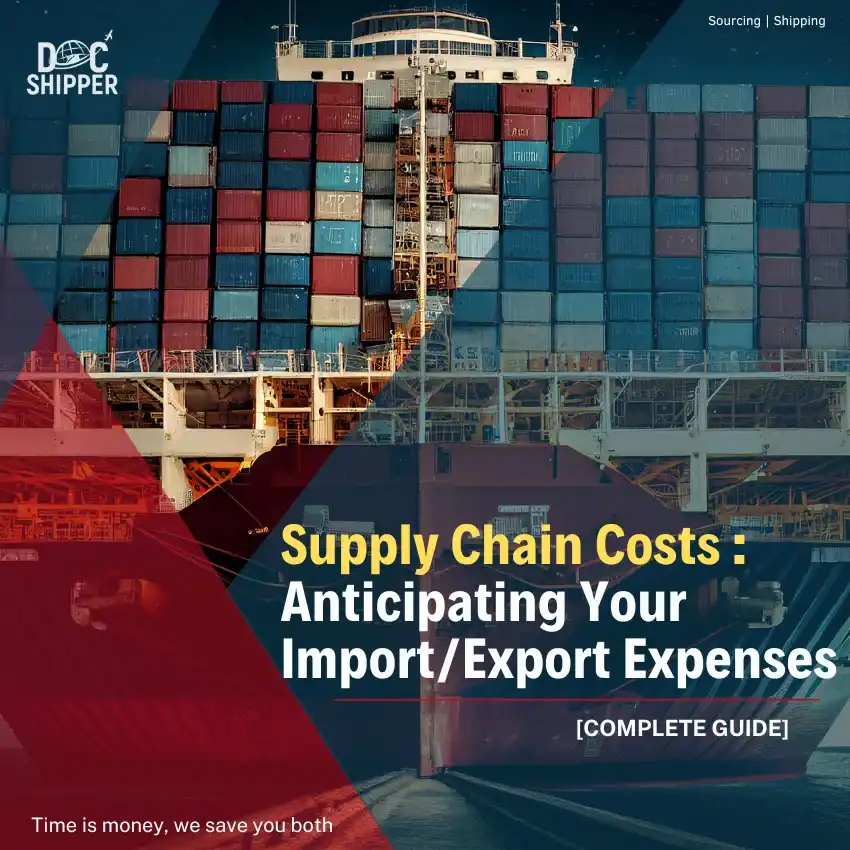
Supply Chain Costs: Anticipating Your Import/Export Expenses [COMPLETE GUIDE]
Estimated reading time: 9 minutes
In the hyper-competitive landscape of global trade, the ability to accurately forecast and manage expenditures is often the difference between a thriving enterprise and one struggling to maintain margins. As businesses expand their reach across borders, understanding Supply Chain Costs: Anticipating Your Import/Export Expenses [COMPLETE GUIDE] becomes an essential strategic pillar. For companies operating within or through Vietnam—a pivotal hub in the Southeast Asian manufacturing corridor—the complexity of these costs is magnified by shifting trade policies, fluctuating freight rates, and the intricate dance of international compliance.
The cost of importing and exporting goods is rarely a single line item. Instead, it is a multifaceted web of transportation fees, customs duties, insurance premiums, and administrative overheads. According to recent industry analysis, companies must navigate a volatile environment where a single disruption at a major port or a sudden shift in currency value can ripple through the entire balance sheet. This guide aims to deconstruct these expenses, providing business leaders and supply chain managers with the insights needed to build more resilient, cost-effective logistics operations.
Table of Contents
- Deconstructing the Components of Supply Chain Costs
- Key Trends and Data Shaping the Current Landscape
- Risk Factors: Volatility in Global Import/Export
- Strategies for Cost Optimization and Savings
- Practical Lessons for Logistics Professionals
- How Scanwell Logistics Vietnam Can Help
- Conclusion
- FAQ
Deconstructing the Components of Supply Chain Costs
To effectively manage Supply Chain Costs: Anticipating Your Import/Export Expenses [COMPLETE GUIDE], one must first identify the hidden and visible layers of expenditure. Logistics expenses are far more than just the price of a shipping container; they represent a total “landed cost” that encompasses every cent spent from the point of origin to the final destination.
Primary Transportation Costs
Transportation remains the largest variable in the supply chain. This includes the primary freight (ocean, air, or road), but also includes “first-mile” and “last-mile” delivery costs. Whether you are moving electronics from Ho Chi Minh City or sourcing raw materials from Europe, the mode of transport dictates the baseline expense. Ocean freight is generally the most cost-effective for large volumes, while air freight is reserved for high-value or time-sensitive items where the speed justifies the premium price.
Customs and Regulatory Compliance
According to the World Trade Organization, customs clearance costs can range from 1% to 5% of the total value of the goods. However, this percentage can climb significantly if errors are made in documentation or if the goods are subject to specific tariffs. In Vietnam, navigating the General Department of Vietnam Customs requires precise Harmonized System (HS) code classification. Incorrect coding leads to fines, delays, and unexpected storage fees at the port, which can quickly erode profit margins.
Insurance and Risk Mitigation
While often overlooked, insurance is a non-negotiable component of supply chain costs. Protecting cargo against theft, damage, or loss during transit provides a financial safety net. Given the risks of maritime transport or long-haul trucking, the premium paid for insurance is a necessary investment to prevent catastrophic financial loss from a single incident.
Key Trends and Data Shaping the Current Landscape
Data-driven decision-making is the hallmark of a sophisticated logistics strategy. By analyzing current market trends, businesses can better anticipate their import and export expenses.
- Global Trade Imbalances: Data from the Bureau of Economic Analysis highlights a growing global trade deficit, particularly with the US experiencing significant gaps. These imbalances often lead to equipment shortages—such as empty containers being in the wrong place—which can drive up repositioning fees for exporters.
- Container Pricing Benchmarks: Research from Freightos suggests that the average cost of shipping a standard container from China to the US hovers around $2,000. However, this figure is a baseline that can fluctuate wildly based on seasonal demand, fuel surcharges (BAF), and port congestion levels.
- The Digital Shift: The industry is moving toward digital platforms to streamline customs and documentation. Companies that leverage these tools are seeing a reduction in “soft costs”—the administrative labor required to manage paperwork and track shipments manually.
Risk Factors: Volatility in Global Import/Export
Anticipating expenses requires an honest assessment of external risks that are often outside a company’s direct control. A resilient supply chain is one that factors these potential disruptions into its financial modeling.
Currency Fluctuations
In international trade, goods are often invoiced in US Dollars or Euros. For Vietnamese businesses, the exchange rate between the VND and these major currencies can significantly impact the final cost of imports. A sudden devaluation of the local currency makes foreign raw materials more expensive, while a strong currency might make exports less competitive in the global market.
Supply Chain Disruptions
Natural disasters, geopolitical tensions, and port congestion are the “black swan” events of logistics. When a major port experiences a backlog, vessels are forced to wait, leading to demurrage and detention charges. These “hidden” costs are rarely included in initial quotes but can add thousands of dollars to a single shipment’s total expense.
Strategies for Cost Optimization and Savings
While some costs are fixed, many elements of the supply chain offer opportunities for optimization. Proactive management can lead to substantial long-term savings.
- Supplier Negotiation: High-volume shippers have more leverage. By consolidating shipments or committing to long-term contracts with freight forwarders and suppliers, companies can often secure more competitive rates than those found on the spot market.
- Just-In-Time (JIT) Inventory: Implementing a JIT system allows companies to receive goods only as they are needed in the production process. This minimizes warehousing and handling costs, reducing the amount of capital tied up in sitting inventory.
- Digital Integration: Using digital platforms to automate customs filings and cargo tracking reduces the likelihood of human error. Errors in documentation are a primary cause of customs delays, which directly translate to increased labor and storage costs.
Practical Lessons for Logistics Professionals
Based on industry best practices and the current economic climate, logistics managers should focus on the following actionable steps:
- Conduct Deep Research: Do not settle for the first quote. Thoroughly vet suppliers and freight forwarders to ensure you are receiving market-competitive pricing and reliable service levels.
- Build a Risk Management Plan: Identify your most vulnerable supply chain links. If you rely on a single port or a single carrier, develop “Plan B” routes and partnerships to mitigate the cost of sudden disruptions.
- Stay Updated on Regulations: Trade policies are fluid. Changes in Free Trade Agreements (FTAs), such as the EVFTA or CPTPP, can drastically change the duty structures for imports and exports. Staying informed helps avoid unexpected tax liabilities.
- Optimize Packaging: Freight costs are often calculated by weight or volume (dim weight). Efficient packaging that minimizes wasted space can lead to lower shipping costs across thousands of units.
How Scanwell Logistics Vietnam Can Help
At Scanwell Logistics Vietnam, we understand that managing Supply Chain Costs: Anticipating Your Import/Export Expenses [COMPLETE GUIDE] is about more than just moving boxes—it’s about financial precision and operational excellence. Our team of experts provides the local knowledge and global network necessary to navigate the complexities of the Vietnamese market.
We offer end-to-end solutions designed to provide visibility and control over your logistics spend. From customs brokerage expertise that prevents costly delays to flexible warehousing solutions that optimize your inventory flow, Scanwell is your partner in driving supply chain efficiency.
- Ocean Freight: Tailored FCL and LCL solutions with competitive routing to and from Vietnam’s major ports.
- Air Freight: Rapid transit options for high-priority cargo, ensuring your supply chain stays agile.
- Warehousing & Distribution: Modern facilities providing value-added services and efficient stock management.
- Customs Brokerage: Expert handling of documentation and HS coding to ensure seamless compliance and minimal duties.
- Advanced Tracking: Full visibility into your shipments to help you plan and anticipate costs in real-time.
Conclusion
Mastering the art of anticipating import and export expenses is a continuous process of learning and adaptation. As global trade dynamics shift, the most successful companies will be those that view their supply chain not as a cost center, but as a strategic asset. By understanding the core components of costs—from freight and insurance to the nuances of customs clearance—businesses can insulate themselves against volatility.
The integration of technology, the adoption of risk management strategies, and the partnership with experienced logistics providers like Scanwell Logistics Vietnam are the keys to maintaining a competitive edge. In a world where every dollar counts, a well-planned logistics strategy is the best defense against the unexpected.
Call to Action
Ready to turn these logistics insights into real competitive advantages?
Explore Scanwell Logistics Vietnam
Contact our experts for tailored support
FAQ
What is the most common “hidden” cost in importing?
Demurrage and detention fees are the most common hidden costs. These occur when cargo remains at the port longer than the “free time” allowed by the carrier, often due to customs delays or trucking shortages.
How much should I budget for customs clearance?
While it varies by product and country, a safe estimate is between 1% and 5% of the total value of the goods for the service fees, excluding the actual duties and taxes owed to the government.
Can digitalization really reduce my logistics costs?
Yes. Digital platforms reduce the “administrative cost” of shipping by automating documentation, reducing errors that lead to fines, and providing real-time data that allows for better inventory and transport planning.
Why should I work with a local freight forwarder in Vietnam?
Local forwarders like Scanwell Logistics Vietnam have deep relationships with local customs officials and a thorough understanding of Vietnamese trade regulations, which helps in avoiding costly compliance mistakes.