














Types of Freight Forwarders: A Complete Guide for Modern Businesses
Estimated reading time: 9 minutes
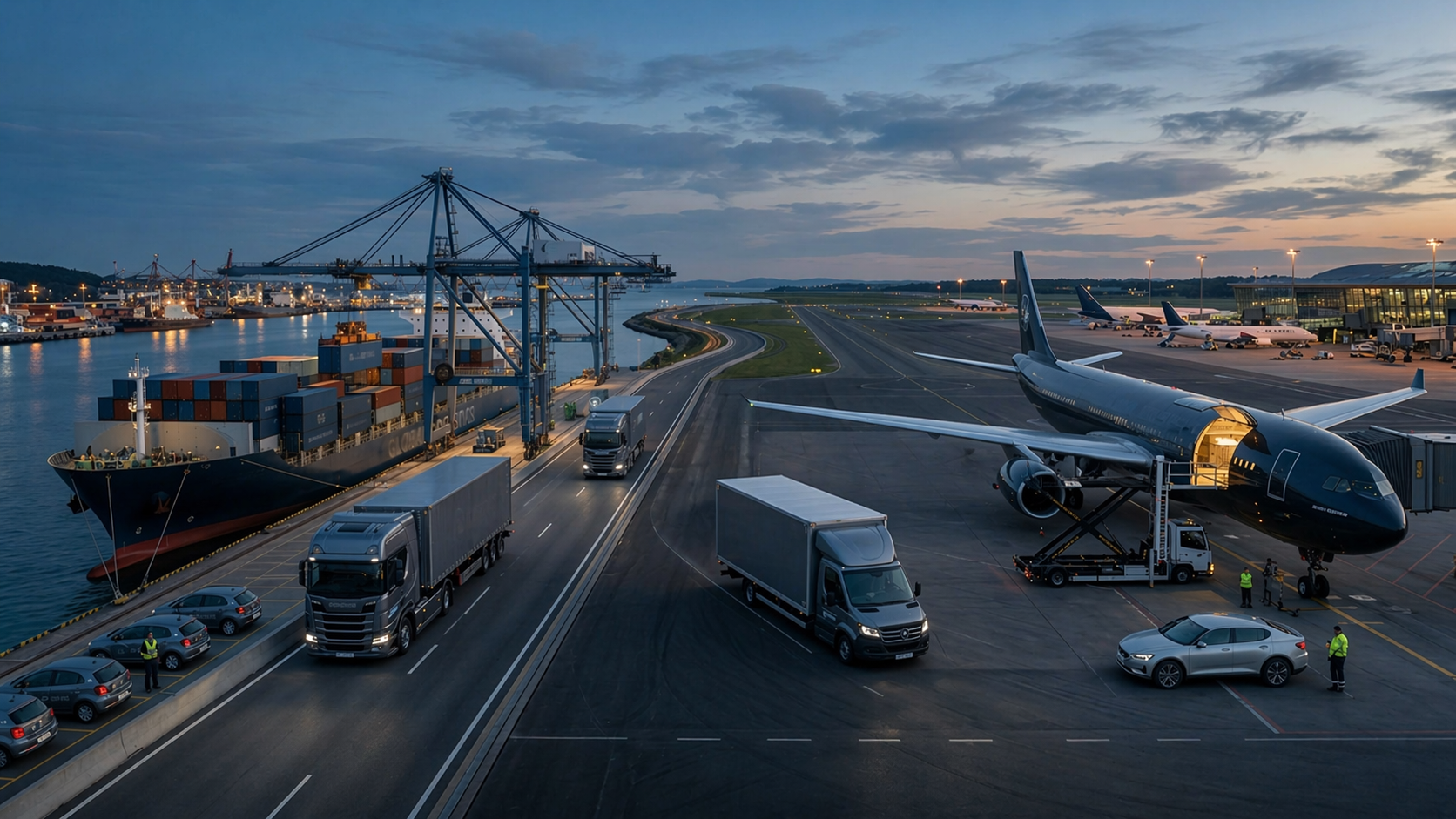
In the complex world of international trade, the movement of goods from point A to point B is rarely a straight line. For business leaders and supply chain managers, navigating the labyrinth of global shipping requires more than just a carrier; it requires a strategic partner. This is where understanding the different Types of Freight Forwarders: A Complete Guide becomes essential. A freight forwarder acts as the architect of your supply chain, coordinating the intricate details of transportation, documentation, and compliance to ensure your cargo reaches its destination efficiently.
As global markets become more volatile and consumer demands for speed increase, the “one-size-fits-all” approach to logistics is no longer viable. Whether you are importing raw materials for manufacturing in Vietnam or exporting high-tech electronics to Europe, the specific type of forwarder you choose can drastically impact your bottom line. This guide will break down the primary categories of forwarders, from mode-specific specialists to complex multimodal architects, helping you identify which partner aligns with your operational goals and budget.
In the following sections, we will explore the nuances of ocean, air, and road forwarding, the regulatory expertise of customs brokers, and the flexibility offered by Non-Vessel Operating Common Carriers (NVOCCs). By the end of this analysis, you will have a clear framework for selecting a logistics partner that not only moves your freight but also adds value to your entire supply chain network.
Table of Contents
- The Evolution of Freight Forwarding
- Categorizing the Types of Freight Forwarders: A Complete Guide
- The Critical Role of Specialized and Regulatory Partners
- Operational Impacts on Global Supply Chains
- Practical Lessons for Logistics Professionals
- How Scanwell Logistics Vietnam Can Help
- Conclusion
- FAQ
The Evolution of Freight Forwarding
Historically, freight forwarders were seen merely as booking agents. However, the modern logistics landscape has transformed them into comprehensive service providers. A forwarder does not typically own the ships, planes, or trucks (unless they are an asset-based provider); instead, they leverage their industry relationships and expertise to negotiate the best possible rates and routes.
For a business operating in a burgeoning hub like Vietnam, the choice of a forwarder is a strategic decision. With the shift toward “China Plus One” strategies, the demand for sophisticated logistics has skyrocketed. Forwarders today must handle everything from warehouse management and inventory tracking to real-time visibility and risk mitigation. Understanding the Types of Freight Forwarders: A Complete Guide allows decision-makers to see beyond the price tag and evaluate the service depth required for their specific industry.
Categorizing the Types of Freight Forwarders: A Complete Guide
To effectively manage a supply chain, one must understand how forwarders categorize themselves based on transportation modes and legal structures. Each type offers distinct advantages depending on the volume, urgency, and nature of the goods.
1. Air Freight Forwarders
Air freight forwarders are the specialists of speed. They focus exclusively on transporting goods via aircraft, managing everything from airport-to-airport movements to integrated door-to-door services. These forwarders are essential for high-value, low-volume cargo or items with a limited shelf life.
- Best for: Perishable goods (fruits, seafood), electronics, pharmaceutical products, and emergency spare parts.
- Key Advantage: Unmatched transit speed and high levels of security.
2. Ocean Freight Forwarders
Handling the vast majority of global trade by weight, ocean freight forwarders specialize in sea-based transport. They coordinate shipments using containers (FCL/LCL), bulk cargo for commodities, or roll-on/roll-off (RORO) for vehicles and heavy machinery.
- Best for: Large-volume shipments, raw materials, furniture, and heavy industrial equipment.
- Key Advantage: The most cost-effective method for long-distance international trade.
3. Road and Rail Freight Forwarders
Overland transport remains the backbone of domestic and regional distribution. Road freight forwarders utilize trucks and vans to provide flexible, door-to-door delivery. Rail freight forwarders, on the other hand, offer a middle ground between the speed of road and the capacity of ocean transport, often used for transporting bulk commodities like coal or grain over vast continental distances.
- Road: Ideal for retail products and construction materials requiring local delivery.
- Rail: Suitable for large-volume, land-locked transport where cost-efficiency is prioritized.
4. Multimodal Freight Forwarders
Complexity often requires a blend of modes. Multimodal forwarders coordinate shipments using two or more transportation types (e.g., Sea-Air or Rail-Road). They provide a single point of contact and a single contract (Bill of Lading) for the entire journey, simplifying what would otherwise be a logistical nightmare for the shipper.
The Critical Role of Specialized and Regulatory Partners
Beyond just moving boxes, certain “Types of Freight Forwarders” provide specialized legal and operational functions that are non-negotiable for international compliance.
NVOCC (Non-Vessel Operating Common Carrier)
An NVOCC acts as a carrier to the shipper but as a shipper to the actual vessel-operating liner. They “charter” or buy space in bulk from shipping lines and then sell it to smaller shippers. This allows small-to-medium enterprises (SMEs) to access competitive rates that would normally only be available to massive corporations.
Customs Brokers
While often categorized separately, many top-tier forwarders operate as customs brokers. Their primary role is to navigate the complex regulatory environment of cross-border trade. They handle documentation, duty payments, and licensing, ensuring that goods do not get stuck at the port—a delay that can cost thousands of dollars in demurrage fees.
Specialized Freight Forwarders
Some cargo requires more than a standard container. Specialized forwarders have the equipment and expertise to handle:
- Refrigerated (Reefer) Goods: Maintaining the cold chain for food and medicine.
- Hazardous Materials: Ensuring safety compliance for chemicals and batteries.
- Oversized Loads: Project cargo like wind turbine blades or factory components.
Operational Impacts on Global Supply Chains
The selection of a freight forwarder from the “Types of Freight Forwarders: A Complete Guide” is not merely an administrative task; it is a strategic lever for supply chain resilience. The impact of this choice resonates through several key operational areas.
Lead Time and Reliability: An air freight forwarder can reduce lead times from weeks to days, which is critical for maintaining lean inventory levels. Conversely, a multimodal forwarder might find a creative route that bypasses a congested port, saving time and avoiding the “bottleneck effect” that has plagued global shipping in recent years.
Cost Optimization: By utilizing an NVOCC, smaller shippers can benefit from economies of scale. Furthermore, a forwarder with strong customs brokerage capabilities can help a business identify trade agreements (like the EVFTA for Vietnam-EU trade) that reduce or eliminate import duties, directly improving the company’s profitability.
Risk Management: Specialized forwarders understand the specific risks associated with certain cargo. For example, a specialized forwarder handling hazardous materials will ensure all IMO (International Maritime Organization) regulations are met, preventing catastrophic accidents and legal liabilities.
Practical Lessons for Logistics Professionals
Based on the diverse “Types of Freight Forwarders: A Complete Guide,” here are actionable insights for supply chain managers to optimize their operations:
- Audit Your Cargo Needs: Before choosing a forwarder, classify your goods by urgency, value, and sensitivity. Don’t pay for air freight if your lead times allow for ocean transport, but don’t risk high-value electronics on a slow, low-security route.
- Verify Customs Expertise: Especially in Vietnam, where regulations can change frequently, ensure your partner has a deep understanding of local customs procedures to avoid costly storage fees at the port.
- Look for “All-In” Visibility: Choose a forwarder that offers technology-enabled tracking. Knowing where your cargo is in real-time allows you to manage customer expectations and adjust production schedules.
- Evaluate the Network: A forwarder is only as good as their local agents and carrier relationships. Ensure they have a strong presence in both the origin and destination countries.
How Scanwell Logistics Vietnam Can Help
Scanwell Logistics Vietnam stands at the intersection of local expertise and global reach. As a comprehensive provider, we embody the best qualities discussed in this Types of Freight Forwarders: A Complete Guide. We understand that the Vietnamese market requires a nuanced approach—combining world-class technology with a deep understanding of local infrastructure and trade regulations.
Whether you are looking for the cost-efficiency of an NVOCC, the speed of air freight, or the complexity of multimodal project cargo, Scanwell provides tailored solutions that grow with your business. Our team doesn’t just move freight; we provide the visibility and reliability you need to compete on a global scale.
- Ocean Freight: Reliable FCL and LCL services connecting Vietnam to major global ports.
- Air Freight: High-priority solutions for time-sensitive electronics and apparel.
- Warehousing & Distribution: Secure storage and efficient last-mile delivery.
- Customs Brokerage: Expert navigation of Vietnamese and international trade compliance.
- Full Visibility: Advanced tracking systems to keep your supply chain transparent.
Conclusion
Choosing the right logistics partner from the various Types of Freight Forwarders: A Complete Guide is a defining factor in a company’s success. As we have explored, whether it is the specialized care of a reefer forwarder, the regulatory shield of a customs broker, or the cost-saving power of an NVOCC, each type plays a distinct role in the global movement of goods.
Logistics leaders must move beyond viewing freight as a commodity and start viewing it as a strategic asset. By matching your specific cargo needs with the right forwarding expertise, you can reduce risks, lower costs, and ensure that your products reach the market ahead of the competition. In the dynamic landscape of 2024 and beyond, flexibility and expertise are the currencies of a successful supply chain.
Call to Action
Ready to optimize your global shipping strategy with a partner who understands every facet of the industry?
Explore Scanwell Logistics Vietnam
Contact our experts for tailored support
FAQ
What is the main difference between an NVOCC and a standard freight forwarder?
While both act as intermediaries, an NVOCC (Non-Vessel Operating Common Carrier) takes on the legal status of a carrier and issues its own Bill of Lading. They often buy large blocks of space on vessels and resell them, which can offer better flexibility for smaller shipments.
When should I choose a multimodal freight forwarder over a mode-specific one?
Choose a multimodal forwarder when your shipment requires a combination of sea, air, or land transport to reach its destination. This is particularly useful for complex international routes where a single point of accountability is needed to manage multiple handoffs.
Do I need a separate customs broker if I already have a freight forwarder?
Not necessarily. Many full-service freight forwarders, like Scanwell Logistics Vietnam, have in-house customs brokerage teams. Using an integrated partner can often lead to smoother communication and fewer delays at the border.
How do I know if my cargo requires a specialized freight forwarder?
If your cargo is temperature-sensitive, hazardous, oversized (OOG), or exceptionally high-value, you should look for a specialized forwarder. These partners have the specific equipment—such as reefer containers or flat racks—and the training to handle cargo safely and legally.