









The Gate of Tears: What Happens to Global Trade if Bab el-Mandeb Closes?
Estimated reading time: 9 minutes
In the world of maritime logistics, few names carry as much historical weight or current anxiety as “Bab el-Mandeb.” Translated from Arabic as the “Gate of Tears,” this narrow strait serves as the southern gateway to the Red Sea and the vital Suez Canal. For centuries, it has been a focal point of commerce and conflict. Today, as geopolitical tensions simmer and the stability of global shipping routes remains under a microscope, a haunting question looms over the industry: The Gate of Tears: What Happens to Global Trade if Bab el-Mandeb Closes?
For business leaders and supply chain managers, the Bab el-Mandeb is not just a geographical coordinate; it is a critical artery for roughly 12% to 15% of global trade. From the electronics manufactured in Vietnam to the crude oil powering European industry, a vast portion of the world’s goods must pass through this 18-mile-wide chokepoint. Any significant disruption here does not just delay a few ships; it triggers a domino effect that impacts inventory levels, fuel prices, and consumer inflation across the planet.
In this deep dive, we will analyze the strategic importance of this passage, the immediate economic consequences of its potential closure, and how the logistics industry—specifically freight forwarders like Scanwell Logistics Vietnam—is adapting to a world where “business as usual” is no longer a guarantee.
Table of Contents
- The Strategic Chokepoint: Why Bab el-Mandeb Matters
- The Economic Ripple Effect: Costs and Inflation
- Operational Impacts: The Long Road Around the Cape
- Practical Lessons for Logistics Professionals
- How Scanwell Logistics Vietnam Can Help
- Conclusion
- FAQ
The Strategic Chokepoint: Why Bab el-Mandeb Matters
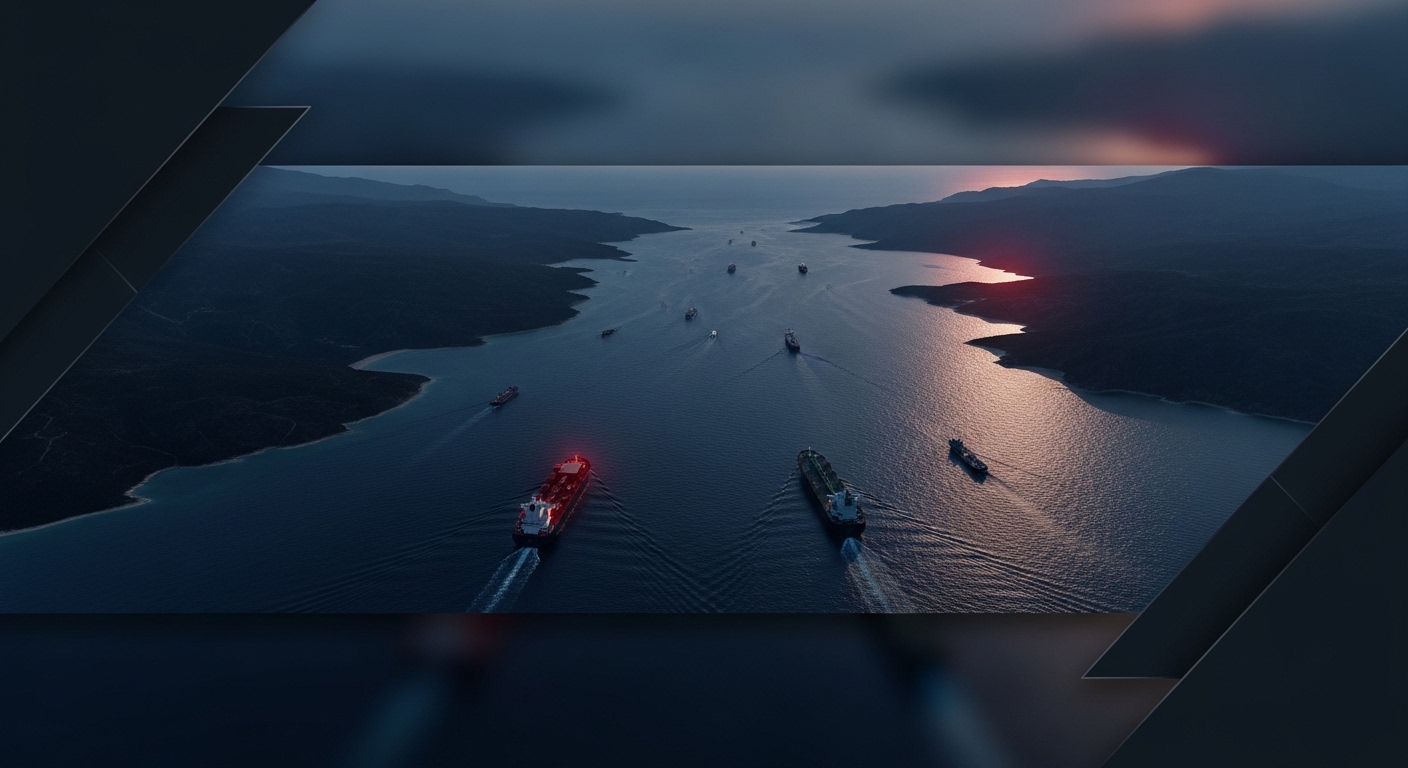
The Bab el-Mandeb strait acts as a funnel connecting the Indian Ocean (via the Gulf of Aden) to the Red Sea. For any vessel traveling from Asia to Europe or the U.S. East Coast through the Suez Canal, this passage is non-negotiable. It is one of the world’s most sensitive maritime “chokepoints,” alongside the Strait of Hormuz and the Malacca Strait.
The “Gate of Tears” earned its name from the dangers of navigating its narrow waters, but today the tears are more likely to be shed by supply chain directors facing massive delays. If the Bab el-Mandeb closes, the Suez Canal effectively becomes a “cul-de-sac.” Ships might be able to enter from the Mediterranean side, but they would have no exit to the south, rendering the world’s most important artificial waterway largely useless for East-West transit.
Volume and Value
Consider the sheer scale of cargo that traverses this region. Thousands of container ships, tankers carrying millions of barrels of oil, and bulk carriers transporting grain and minerals pass through the strait annually. According to trade data, approximately 4.5 million to 8 million barrels of oil flow through this area every day heading toward Europe and North America.
The Economic Ripple Effect: Costs and Inflation
When we ask The Gate of Tears: What Happens to Global Trade if Bab el-Mandeb Closes?, the first and most painful answer is a sharp increase in costs. A closure forces carriers to seek the only viable alternative: sailing around the southern tip of Africa via the Cape of Good Hope.
This rerouting is not a simple detour; it adds approximately 3,000 to 4,000 nautical miles to a typical journey from Asia to Northern Europe. The implications for the global economy are profound:
- Soaring Fuel Consumption: An extra 10 to 14 days at sea requires massive amounts of additional bunker fuel. Carriers pass these costs to shippers through “Emergency Risk Surcharges” or “Bunker Adjustment Factors.”
- Container Shortages: Because ships are spending more time at sea, they are not returning to export hubs (like Hai Phong or Ho Chi Minh City) to pick up new cargo. This “equipment imbalance” causes container prices to spike.
- Insurance Premiums: Even if the strait isn’t fully closed, the mere threat of instability causes “War Risk” insurance premiums to skyrocket, sometimes increasing tenfold in a matter of weeks.
For the end consumer, this translates to “freight-led inflation.” When the cost of moving a 40-foot container from Vietnam to Hamburg jumps from $2,000 to $6,000, that cost eventually finds its way into the price of the goods on the shelf.
Operational Impacts: The Long Road Around the Cape
Operational managers face a logistical nightmare when primary trade routes are compromised. The closure of the Bab el-Mandeb doesn’t just delay one shipment; it breaks the “rhythm” of the global supply chain.
The shift to the Cape of Good Hope creates a series of operational bottlenecks:
1. Extended Transit Times
Supply chains built on “Just-in-Time” (JIT) principles are the first to fail. A two-week delay can lead to factory shutdowns if critical components are stuck at sea. This has been particularly visible in the automotive industry, where components from Asia are essential for European assembly lines.
2. Port Congestion and Vessel Bunching
When ships are diverted, they don’t arrive at their destination ports on their original schedules. Instead, they often arrive in clusters. This “vessel bunching” overwhelms port terminals, leading to longer wait times for berths, congested container yards, and delays in inland trucking.
3. Increased Demand for Air Freight
When sea freight becomes unreliable or too slow, high-value or urgent goods migrate to air cargo. This surge in demand drives up air freight rates, creating a high-cost environment across all modes of transport.
Practical Lessons for Logistics Professionals
While the closing of a major strait is a macro-event, its solutions are micro-actions taken by savvy logistics managers. Here are the best practices for navigating such volatility:
- Diversify Your Routes: Do not rely on a single transit path. Explore multi-modal options, such as Sea-Air solutions (shipping to a hub like Dubai by sea and then flying to Europe).
- Enhance Visibility: Use advanced tracking tools to know exactly where your cargo is. If you know a vessel is being diverted around Africa, you can adjust your downstream inventory planning two weeks in advance rather than reacting when the ship fails to arrive.
- Increase Safety Stock: The era of ultra-lean inventory is pausing. Maintaining a “buffer” of critical supplies can protect your production lines from the 10-14 day delays common in Red Sea diversions.
- Partner with Local Experts: A freight forwarder with deep roots in both the origin (Vietnam) and the destination can provide real-time intelligence that global carriers might not communicate promptly.
How Scanwell Logistics Vietnam Can Help
In times of global trade instability, the value of a partner like Scanwell Logistics Vietnam becomes clear. We don’t just book space on ships; we navigate the complexities of a changing world to keep your business moving. Whether it’s managing the fallout from a closure at the Bab el-Mandeb or finding space during a peak season, our team provides the agility that large-scale operations often lack.
Scanwell Logistics Vietnam offers a comprehensive suite of services designed to mitigate the risks discussed in this article:
- Strategic Ocean Freight: We maintain strong relationships with multiple carriers, allowing us to pivot between routes (Suez vs. Cape of Good Hope) based on the latest safety and cost data.
- Agile Air Freight: For time-sensitive cargo that cannot afford a 40-day sea voyage around Africa, our air freight solutions ensure your products reach the market on time.
- Smart Warehousing: Our distribution centers help you manage increased safety stock and regional fulfillment to buffer against transit delays.
- Reliable Trucking: Seamless domestic and cross-border trucking to ensure that once your cargo hits the port, it reaches its final destination without further delay.
- Customs & Compliance: Navigating the changing regulatory landscape during times of geopolitical shift requires expert documentation support.
Conclusion
The question of The Gate of Tears: What Happens to Global Trade if Bab el-Mandeb Closes? is no longer a “what if” scenario for science fiction. It is a real-world stress test for the modern supply chain. A closure would signify a massive structural shift in how goods move between the East and the West, favoring those who are prepared, agile, and well-informed.
The primary takeaway for logistics leaders is that resilience is now just as important as cost-efficiency. By understanding these chokepoints and working with partners who can provide visibility and alternative routing, businesses can minimize the “tears” and continue to thrive even when the world’s most critical gates are threatened.
Call to Action
Ready to turn these logistics insights into real competitive advantages?
Explore Scanwell Logistics Vietnam
Contact our experts for tailored support
FAQ
Why is the Bab el-Mandeb strait so important?
It is the southern entry point to the Red Sea. Without access to this strait, vessels cannot reach the Suez Canal from the south, forcing them to take the much longer route around the entire continent of Africa.
How much longer does it take to sail around Africa?
Typically, rerouting via the Cape of Good Hope adds between 10 to 14 days to a voyage between Asia and Europe, depending on the speed of the vessel and the specific port of call.
Does a closure affect Vietnam’s exports?
Yes. Vietnam is a major exporter to Europe and the U.S. East Coast. Any disruption in the Red Sea leads to higher freight rates, container shortages in Vietnamese ports, and longer lead times for Vietnamese manufacturers.
What can I do if my shipment is delayed by these disruptions?
The best course of action is to communicate early with your freight forwarder. Options may include rerouting via air freight for urgent parts, using sea-air multi-modal solutions, or adjusting your production schedules based on real-time tracking data provided by Scanwell Logistics Vietnam.