













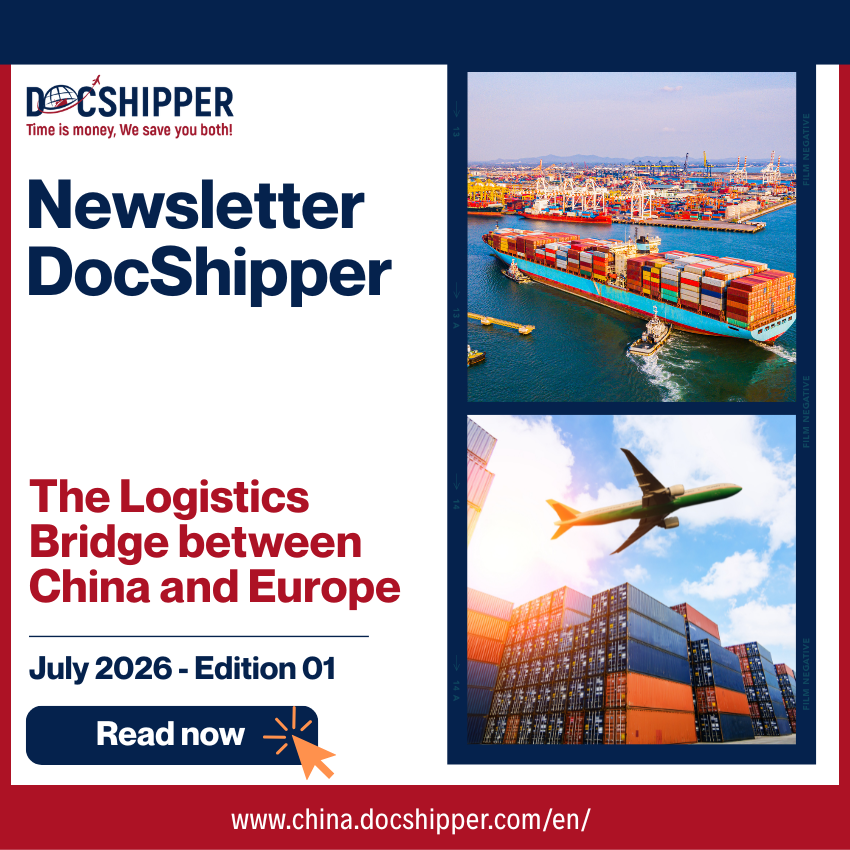
The Logistics Bridge | China–Europe News | July 2026 – Edition 1
Estimated reading time: 9 minutes
Welcome to the inaugural July 2026 edition of The Logistics Bridge | China–Europe News | July 2026 – Edition 1. As we move into the second half of the decade, the trade corridor connecting the world’s largest manufacturing hub with the European consumer market is undergoing a fundamental restructuring. No longer defined solely by sheer volume, the relationship is shifting toward a model of strategic diversification, resilience, and multi-modal agility.
For logistics managers and supply chain directors, the landscape in 2026 is marked by a complex interplay of legacy challenges—such as the lingering impacts of global disruptions—and new regulatory shifts. Navigating this environment requires more than just booking space; it demands a deep understanding of fluctuating ocean freight rates, constrained air freight capacity, and the rising prominence of rail as a sustainable alternative. This report breaks down the critical updates you need to maintain a competitive edge.
Table of Contents
- Strategic Restructuring: Beyond Volume
- Freight Mode Analysis: Ocean and Air Challenges
- The Rail Boom: Reliability Meets Sustainability
- EU Customs Changes: Navigating New Regulations
- Practical Lessons for Logistics Professionals
- How Scanwell Logistics Vietnam Can Help
- Conclusion
- FAQ
Strategic Restructuring: Beyond Volume
The China–Europe trade corridor is no longer just about moving the maximum number of containers at the lowest possible price. According to recent industry analysis, the focus has shifted toward strategic diversification. This transition is a direct response to the trade tensions and global supply chain disruptions that have defined the early 2020s.
Businesses are increasingly looking to de-risk their logistics operations by spreading their dependency across different routes and transport modes. This restructuring means that while China remains a central pillar, the way goods flow into Europe is becoming more fragmented and sophisticated. Companies are prioritizing “just-in-case” inventory models over “just-in-time,” leading to a surge in demand for flexible warehousing and distribution solutions at both ends of the bridge.
Freight Mode Analysis: Ocean and Air Challenges
The current state of traditional freight modes presents a dual challenge for importers and exporters. As highlighted in The Logistics Bridge | China–Europe News | July 2026 – Edition 1, volatility remains the “new normal” for traditional lanes.
Ocean Freight Rate Volatility
Ocean freight rates have experienced significant surges. These increases are attributed to a combination of factors:
- Ongoing disruptions in global supply chains stemming from previous pandemic-related lockdowns.
- Port congestion and equipment imbalances that continue to plague major trade routes.
- Increased operational costs for carriers, which are being passed down to the cargo owners.
This unpredictability makes long-term budgeting for supply chain managers nearly impossible without fixed-rate contracts or highly agile forwarding partners.
Tight Air Cargo Capacity
On the air freight front, capacity remains exceptionally tight. Airlines are struggling to keep pace with the demand for rapid delivery, especially for high-value electronics and e-commerce goods. The resulting high costs are eating into profit margins, forcing many businesses to re-evaluate which products truly justify the “air-premium.”
The Rail Boom: Reliability Meets Sustainability
One of the most positive trends noted in The Logistics Bridge | China–Europe News | July 2026 – Edition 1 is the explosive growth of rail transportation. As ocean rates climb and air capacity falters, rail has emerged as the “middle way”—offering a balance of speed and cost-effectiveness.
Companies are flocking to rail freight services for several key reasons:
- Reliability: Rail schedules have proven more resilient to the disruptions affecting maritime ports.
- Environmental Impact: Rail is significantly more environmentally friendly than air freight, helping EU-based companies meet their carbon reduction targets.
- Cost Efficiency: While more expensive than ocean freight, rail is considerably cheaper than air cargo, making it ideal for mid-value industrial components.
EU Customs Changes: Navigating New Regulations
A major shift on the horizon involves significant updates to EU customs brokerage and trade compliance procedures. The European Union is introducing these changes to simplify the flow of goods and reduce the time spent in administrative limbo.
However, “simplification” often comes with a steep learning curve. The research indicates that the impact of these changes remains uncertain. For businesses, the risks of being unprepared are high:
- Increased risk of delays at the border due to incorrect documentation.
- Potential for penalties and fines related to non-compliance with new digital filing requirements.
- The need for enhanced transparency in the origin of goods to satisfy stricter EU standards.
Practical Lessons for Logistics Professionals
Based on the trends observed in July 2026, logistics leaders should adopt the following best practices to safeguard their operations:
- Diversify Transport Modes: Do not rely on a single mode of transport. Use a mix of ocean for bulk, rail for consistent flow, and air only for emergencies.
- Optimize Inventory Positioning: Use warehousing and distribution centers strategically to buffer against transportation delays.
- Audit Your Compliance: Ensure your customs brokerage partners are fully briefed on the upcoming EU changes to avoid costly border holds.
- Data-Driven Planning: Use real-time tracking and market data to adjust your logistics operations dynamically as rates and capacities shift.
How Scanwell Logistics Vietnam Can Help
As the China–Europe corridor restructures, Vietnam has become a critical link in the global supply chain, serving as a secondary manufacturing base and a strategic transshipment point. Scanwell Logistics Vietnam is uniquely positioned to help businesses navigate the complexities mentioned in The Logistics Bridge | China–Europe News | July 2026 – Edition 1.
Our team provides the local expertise and global network required to manage multi-modal shipments, ensuring that your goods move efficiently through the restructured corridors of 2026.
- Ocean Freight: Specialized FCL and LCL services with locked-in space to mitigate rate surges.
- Air Freight: Priority access to air capacity for time-sensitive cargo.
- Rail Solutions: Comprehensive China-Europe rail freight management for cost and eco-efficiency.
- Customs & Compliance: Expert customs brokerage to navigate the new EU regulatory landscape seamlessly.
- Warehousing: Flexible storage and distribution solutions in Vietnam and beyond.
Conclusion
The findings from The Logistics Bridge | China–Europe News | July 2026 – Edition 1 underscore a pivotal moment for global trade. The shift from a volume-based strategy to one of strategic diversification is not just a trend but a necessity for survival in a volatile market.
While surging ocean freight rates and tight air freight capacity present significant hurdles, the boom in rail transportation and the streamlining of EU customs offer clear opportunities for those prepared to adapt. Logistics leaders who prioritize flexibility, compliance, and multi-modal integration will be the ones to thrive in this restructured landscape.
Call to Action
Ready to turn these logistics insights into real competitive advantages?
Explore Scanwell Logistics Vietnam
Contact our experts for tailored support
FAQ
Why is the China–Europe trade corridor restructuring in 2026?
The restructuring is driven by the need for strategic diversification. Companies are moving away from high-volume, single-source dependencies due to past pandemic disruptions and ongoing trade tensions, seeking more resilient and varied supply chain routes.
Is rail really a viable alternative to ocean and air freight?
Yes. Rail currently offers a “middle-ground” solution. It is faster than ocean freight and significantly cheaper than air freight, while also providing a lower carbon footprint, making it a favorite for companies with sustainability goals.
What should I do to prepare for the new EU customs changes?
Logistics teams should conduct an immediate audit of their trade compliance processes. Partnering with an experienced customs brokerage like Scanwell Logistics Vietnam can help ensure that your documentation meets the new standards to prevent delays and penalties.
How can I manage the surging costs of ocean freight?
Managing costs requires a mix of long-term carrier contracts, diversifying into different ports of entry, and utilizing logistics operations experts who can provide real-time data to find the most cost-effective windows for shipping.