


















The Butterfly Effect of Last Mile Delivery: Every Move Has a Ripple
Estimated reading time: 8 minutes
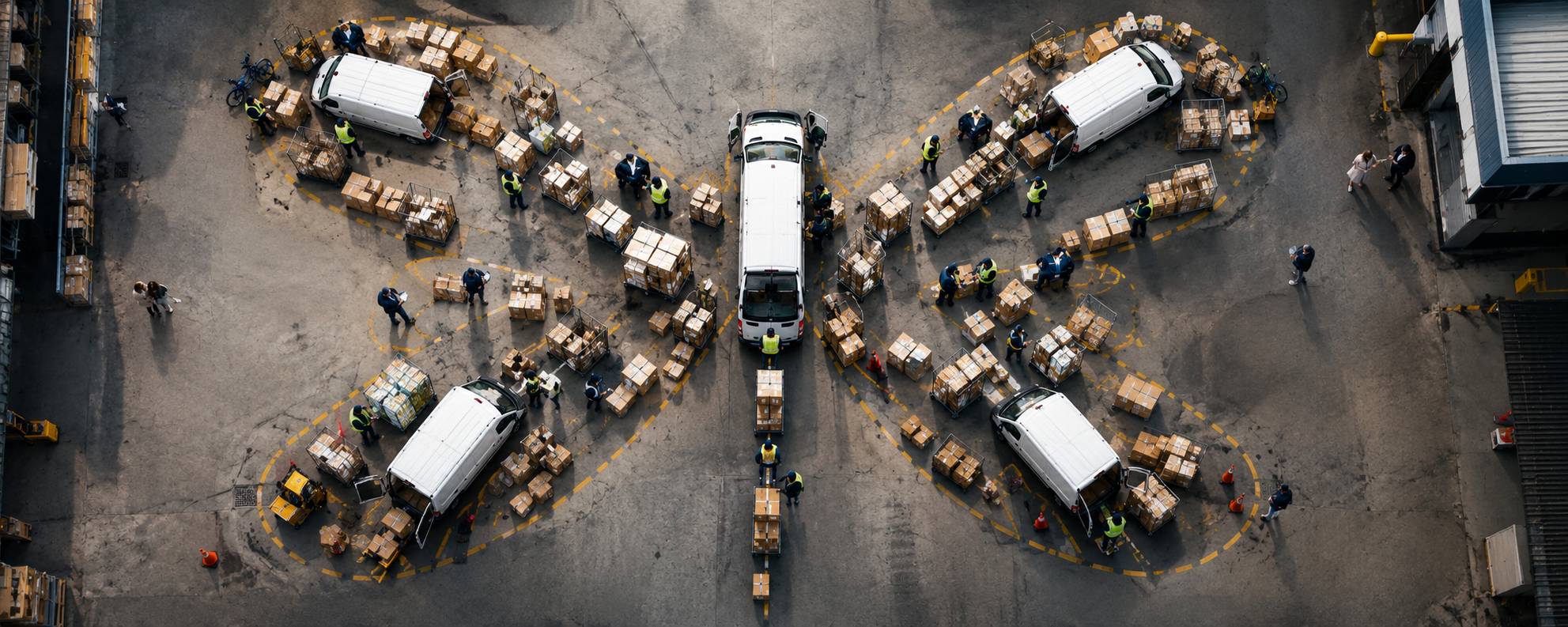
In the intricate web of modern supply chains, The Butterfly Effect of Last Mile Delivery: Every Move Has a Ripple captures a profound truth: a single missed delivery window, a route deviation of five minutes, or a packaging choice made weeks earlier can cascade into delayed inventory, frustrated customers, and eroded margins across continents. What happens at the customer’s doorstep no longer stays there—it echoes backward through distribution centers, freight forwarders, and even manufacturing schedules.
As e‑commerce volumes surge and consumer expectations tighten, the last mile has evolved from a simple handoff into a strategic control point. A delayed parcel in Ho Chi Minh City can trigger a stockout in a Singapore warehouse, prompting an expedited air shipment from Shenzhen that displaces planned ocean capacity. Understanding these ripple effects is no longer optional for logistics leaders—it is the difference between reactive firefighting and proactive network design.
Table of Contents
- Why the Last Mile Became the Strategic Epicenter
- Key Trends Amplifying the Ripple Effect
- Operational Impacts Across the Supply Chain
- Practical Lessons for Logistics Professionals
- How Scanwell Logistics Vietnam Can Help
- Conclusion
- FAQ
Why the Last Mile Became the Strategic Epicenter
Historically, the last mile was treated as a cost center—an unavoidable expense to be minimized. Today, it is the most visible touchpoint between brand and buyer. Research consistently shows that delivery experience influences repeat purchase rates more than product price or even product quality in certain categories. A single failed delivery attempt can increase total shipment cost by 20–30 percent when redelivery, customer service, and return processing are factored in.
The butterfly effect begins with data granularity. When a retailer promises a two‑hour delivery window, the fulfillment system must orchestrate inventory allocation, warehouse picking sequences, carrier dispatch, and real‑time traffic routing simultaneously. A delay at any node—a picker waiting for a mislabeled SKU, a driver caught in an unplanned road closure—propagates forward, breaking the promise and backward, forcing inventory rebalancing across the network.
In Vietnam’s rapidly urbanizing landscape, this dynamic is intensified. Narrow alleyways in Hanoi’s Old Quarter or unpredictable flood‑related road closures in the Mekong Delta turn routine deliveries into complex micro‑operations. Each micro‑decision—whether to deploy a motorbike courier versus a light truck, whether to consolidate at a district hub or ship direct—sends ripples through cost structures, carbon footprints, and service levels.
Key Trends Amplifying the Ripple Effect
Several converging trends are magnifying the sensitivity of last‑mile networks:
- Micro‑fulfillment proliferation: Brands are positioning stock closer to consumers—dark stores, urban warehouses, even retail backrooms. While this shortens delivery distance, it fragments inventory, increasing the risk of stock imbalances that trigger emergency transfers.
- AI‑driven dynamic routing: Algorithms now re‑optimize routes in real time based on traffic, weather, and order density. A single algorithmic tweak can shift hundreds of packages between vans, altering load factors and driver schedules downstream.
- Gig‑economy capacity volatility: Reliance on crowdsourced drivers introduces labor supply shocks. A local event or weather alert can wipe out 30 percent of available couriers in minutes, forcing immediate re‑routing or SLA breaches.
- Sustainability mandates: Cities from Ho Chi Minh City to Amsterdam are mandating zero‑emission zones. Electrification decisions made at the fleet level dictate which neighborhoods can be served profitably, reshaping network design.
- Hyper‑personalized delivery preferences: Consumers now select time slots, locker locations, or even “leave at door with photo proof.” Each preference adds a constraint variable that compounds combinatorially across thousands of daily orders.
These trends do not operate in isolation. A sustainability rule that bans diesel vans from a city center forces a shift to electric cargo bikes, which reduces per‑vehicle capacity, which increases the number of trips, which raises congestion—potentially negating the emissions gain. This is the butterfly effect in action: a well‑intentioned policy creates second‑order consequences that demand holistic modeling.
Operational Impacts Across the Supply Chain
The ripple effect extends far beyond the final kilometer. Consider these transmission pathways:
Warehouse Labor and Layout
When last‑mile cut‑off times move earlier to meet same‑day promises, warehouse shifts must start earlier or run faster. This drives investment in conveyance, goods‑to‑person robotics, and labor scheduling software. A 30‑minute earlier cut‑off can increase peak‑hour picking labor by 15 percent—a cost that flows back to the shipper’s landed cost model.
Middle‑Mile and Linehaul Utilization
Last‑mile density determines middle‑mile consolidation efficiency. If urban deliveries fragment into many small, time‑specific drops, the inbound linehaul trailers arrive less fully utilized. Carriers respond by increasing frequency or accepting lower load factors, both of which raise per‑unit transport cost. In cross‑border corridors like Vietnam–China, this can shift modal choice from rail to truck, altering transit time and carbon profile.
Air Freight Cannibalization
When last‑mile failures cause stockouts at forward-deployed inventory nodes, brands often trigger emergency air replenishment. A single missed delivery wave in a tier‑1 city can justify a charter flight from a manufacturing hub. The cost multiplier—air freight at 10–15× ocean—makes this one of the most expensive ripples in the chain.
Customs and Compliance Feedback Loops
In cross‑border e‑commerce, last‑mile address inaccuracies (missing ward codes, incorrect recipient names) generate customs holds. Each hold consumes brokerage hours, triggers penalty risks, and delays release—feeding back into the promise‑date algorithm that set the original delivery window.
Customer Lifetime Value Erosion
Studies indicate that 58 percent of consumers will not reorder after a poor delivery experience. The ripple here is commercial: marketing spend to acquire a customer is wasted if the fulfillment promise breaks. This metric increasingly appears in logistics KPI dashboards alongside on‑time delivery and cost per parcel.
Practical Lessons for Logistics Professionals
- Design for variability, not just averages: Build routing models with stochastic travel‑time distributions. Use scenario planning (weather, events, capacity shocks) rather than single‑point estimates.
- Synchronize inventory and delivery promises: Expose real‑time available‑to‑promise (ATP) data to the checkout engine. If a SKU cannot be delivered in the promised window, hide the option—preventing the ripple at its source.
- Invest in closed‑loop visibility: Equip every last‑mile scan (pickup, sort, attempt, delivery, exception) with API feeds to the TMS and WMS. Exception alerts should trigger automated replanning, not manual emails.
- Standardize address data with geocoding: Convert every delivery point to lat/long plus administrative hierarchy (province, district, ward). This reduces failed attempts by 12–18 percent in dense Asian cities.
- Model total carbon, not just tailpipe: Evaluate fleet mix changes (EV, cargo bike, consolidation) against the full network—including upstream middle‑mile shifts—to avoid unintended emissions increases.
- Co‑design SLAs with carriers: Move from penalty‑based contracts to shared‑gain models where both parties benefit from density improvements. Joint route engineering sessions twice a year can unlock 5–10 percent cost reduction.
- Close the feedback loop with customers: Post‑delivery NPS surveys tied to specific couriers and time slots reveal micro‑patterns (e.g., a specific apartment complex with access issues) that macro dashboards miss.
How Scanwell Logistics Vietnam Can Help
Scanwell Logistics Vietnam operates at the intersection of international freight management and domestic last‑mile execution. Our integrated platform connects ocean and air inbound flows with a nationwide distribution network, giving shippers a single control tower from factory gate to consumer door.
By consolidating visibility across modes, we help clients anticipate ripple effects before they amplify. A delayed vessel arrival at Cat Lai port automatically recalculates downstream delivery windows, triggers proactive customer notifications, and adjusts warehouse labor plans—all without manual intervention. Our customs brokerage team ensures cross‑border e‑commerce shipments clear smoothly, eliminating the compliance ripple that stalls last‑mile handoff.
For brands building omnichannel fulfillment in Vietnam, Scanwell offers flexible warehousing in key economic zones (Binh Duong, Bac Ninh, Long An) with direct injection into last‑mile carrier networks. This reduces the distance between inventory and consumer, dampening the bullwhip effect of demand variability.
- Ocean freight (FCL/LCL) on major Asia–Vietnam and trans‑Pacific lanes
- Air freight solutions for time‑sensitive and high‑value cargo
- Warehousing, cross‑dock, and value‑added services (kitting, labeling, returns)
- Domestic trucking and cross‑border road transport (Vietnam–China, Vietnam–Cambodia)
- Customs brokerage, import/export licensing, and trade compliance advisory
- End‑to‑end supply chain visibility platform with predictive alerts
- Last‑mile delivery management: route optimization, POD capture, exception handling
Conclusion
The butterfly effect in last‑mile delivery is not a metaphor—it is a measurable network phenomenon. A single decision at the point of delivery reverberates through inventory positions, transport modes, labor schedules, and ultimately, the customer relationship. Leaders who treat the last mile as an isolated cost center will forever chase symptoms. Those who model it as a dynamic, interconnected system gain the ability to design resilience, reduce total landed cost, and turn delivery into a competitive advantage.
The path forward requires three disciplines: granular data (geocoded addresses, real‑time scans), integrated planning (ATP‑aware promise engines, stochastic routing), and aligned partnerships (shared‑gain carrier contracts, technology‑enabled 3PLs). In Vietnam’s fast‑evolving logistics landscape, these capabilities separate market leaders from followers.
Every move has a ripple. The question is whether your network amplifies the turbulence—or absorbs it.
Call to Action
Ready to turn these logistics insights into real competitive advantages?
Explore Scanwell Logistics Vietnam
Contact our experts for tailored support
FAQ
What is the butterfly effect in last‑mile delivery?
It describes how a small change—such as a missed delivery attempt, a route deviation, or a packaging decision—creates cascading impacts upstream (warehouse labor, linehaul utilization, inventory allocation) and downstream (customer satisfaction, repeat purchase rate, brand reputation).
How can shippers measure the ripple effect in their own network?
Track correlated KPIs: last‑mile exception rate vs. upstream warehouse overtime hours; delivery promise changes vs. emergency air freight spend; address accuracy vs. customs hold duration. A control‑tower dashboard linking these metrics reveals the hidden cost chains.
Does micro‑fulfillment always reduce the butterfly effect?
Not automatically. While micro‑fulfillment shortens physical distance, it fragments inventory and increases the number of decision nodes. Without synchronized ATP data and dynamic replenishment rules, it can amplify stock‑imbalance ripples. The net benefit depends on integration maturity.
What role does technology play in dampening negative ripples?
AI‑driven routing, real‑time visibility APIs, and automated exception replanning convert reactive firefighting into proactive network control. The key is closed‑loop data: every scan event must feed back into the planning engine within seconds, not hours.
How can Scanwell Logistics Vietnam specifically address last‑mile ripple risks for my business?
Scanwell provides an integrated freight‑to‑last‑mile platform with unified visibility, Vietnam‑focused warehousing in strategic hubs, customs expertise for cross‑border e‑commerce, and a managed last‑mile carrier network with performance‑based SLAs. This end‑to‑end control reduces the number of handoffs where ripples originate.