













NZ GRI Increases 2026: Why Smart Businesses Are Locking In Rates Before July
Estimated reading time: 8 minutes
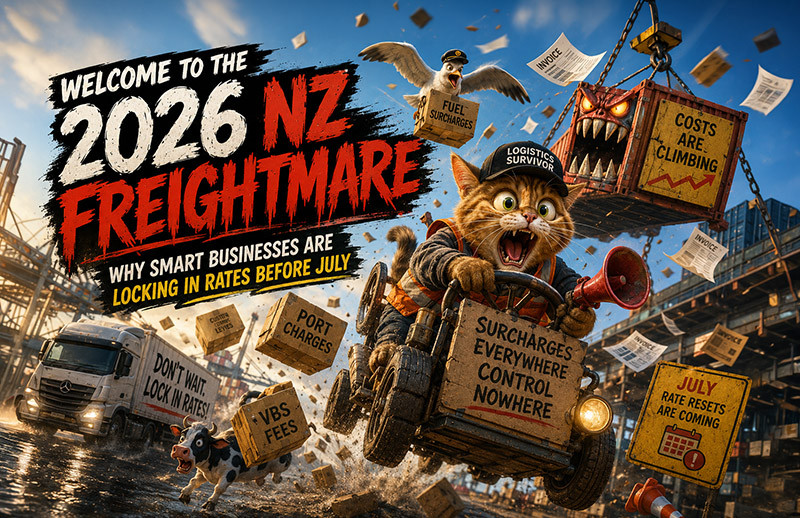
The global shipping landscape is famously volatile, but for those operating within the New Zealand trade lanes, 2026 is shaping up to be a pivotal year. As we look toward the horizon, the logistics industry is sounding the alarm on a significant shift: the NZ GRI Increases 2026. For importers and exporters, a General Rate Increase (GRI) is more than just a line item change; it is a fundamental shift in the cost of doing business.
Historically, many companies have enjoyed a period of relative stability where securing capacity did not feel like a constant battle. However, the upcoming rate hikes forecasted for 2026 suggest that the “business as usual” approach will no longer suffice. Logistics managers and supply chain directors who wait until the second half of the year to address their contracts may find themselves facing ballooning costs and diminished margins.
In this comprehensive guide, we analyze why smart businesses are moving aggressively to lock in their freight rates before the July deadline. We will explore the mechanics of the NZ GRI, the importance of data-driven benchmarking, and why the current ease of capacity is a deceptive calm before the proverbial storm.
Table of Contents
- Understanding the NZ GRI Increases 2026
- The Capacity Deception: Why Current Ease is Misleading
- Strategic Benchmarking: More Than Just Price Comparison
- Practical Lessons for Logistics Professionals
- How Scanwell Logistics Vietnam Can Help
- Conclusion
- FAQ
Understanding the NZ GRI Increases 2026
A General Rate Increase (GRI) is an adjustment of freight rates by ocean carriers across all or specific trade routes within a set period. In the context of New Zealand, these increases are often driven by a combination of rising operational costs, port infrastructure fees, and the geographic isolation of the islands, which requires complex feeder vessel networks.
As we approach 2026, several factors are converging to push these rates upward. Carrier alliances are restructuring, and fuel regulations are becoming stricter, leading to higher baseline costs. When carriers announce NZ GRI Increases 2026, they are essentially signaling that the cost of maintaining reliable service to and from New Zealand has reached a threshold where price adjustments are mandatory.
For businesses, the “July” milestone is critical. Mid-year typically marks the transition into the peak season for many industries. By locking in rates before July 2026, companies effectively shield themselves from the full impact of these GRI implementations, ensuring that their budget forecasts remain accurate through the end of the fiscal year.
The Capacity Deception: Why Current Ease is Misleading
One of the most dangerous traps for a supply chain manager is complacency during periods of high capacity. Currently, many companies report that they do not struggle to secure space on vessels or get rates to capacity. While this feels like a “buyer’s market,” it is often the precursor to a sharp correction.
The Shift from Surplus to Scarcity
The logistics market is cyclical. When capacity is high, rates tend to bottom out. However, carriers cannot operate at a loss indefinitely. To counteract low rates, carriers often “blank” (cancel) sailings or reduce the number of vessels on a route to artificially tighten supply.
- Inventory Cycles: As businesses prepare for 2026, a surge in demand can quickly eat up existing capacity.
- Operational Bottlenecks: If the NZ GRI Increases 2026 are met with a sudden rush of bookings before the new rates kick in, ports may experience congestion, further limiting available space.
- Route Rationalization: Carriers may prioritize more profitable long-haul routes over regional New Zealand services, reducing local options.
The “smart money” is not waiting for capacity to tighten. Instead, proactive businesses are utilizing the current window of availability to negotiate long-term contracts that guarantee both space and pricing before the market flips in 2026.
Strategic Benchmarking: More Than Just Price Comparison
To effectively navigate the NZ GRI Increases 2026, businesses must master the art of benchmarking. Benchmarking is the process of comparing your freight rates and service levels against market averages and best-in-class performers. Without proper benchmarking, you are essentially flying blind during negotiations.
Proper benchmarking involves analyzing several key data points:
- Net Freight Cost: Comparing the base rate across multiple carriers for the same New Zealand routes.
- Surcharges and Ancillaries: Looking beyond the ocean freight to include BAF (Bunker Adjustment Factor), port handling, and documentation fees.
- Transit Time Reliability: A cheaper rate is no bargain if the cargo consistently arrives 14 days late, impacting your inventory turnover.
By establishing a robust benchmark before July, businesses can enter negotiations with carriers from a position of strength. If you know the market average for Vietnam-to-NZ lanes, you can identify if a proposed GRI is reasonable or if there is room for negotiation.
Practical Lessons for Logistics Professionals
Navigating the 2026 rate landscape requires a mix of foresight and tactical execution. Here are the steps logistics leaders should take right now:
- Review Historical Volume: Analyze your 2024 and 2025 shipping volumes to provide carriers with accurate projections for 2026. Carriers are more likely to offer fixed rates to high-volume, reliable partners.
- Initiate “Early-Bird” Tenders: Do not wait for the standard tender season. Start conversations with your freight forwarders and carriers in Q1 of 2026—or even late 2025—to lock in “Pre-July” pricing.
- Diversify Carrier Portfolios: Avoid relying on a single carrier. If one carrier implements a massive NZ GRI Increase, having relationships with others allows for quick pivoting.
- Leverage Technology: Use digital freight platforms to track real-time rate movements. Data is your best defense against arbitrary rate hikes.
How Scanwell Logistics Vietnam Can Help
As a premier logistics provider with deep roots in Southeast Asia, Scanwell Logistics Vietnam is uniquely positioned to help businesses mitigate the risks associated with the NZ GRI Increases 2026. We understand that for many Vietnamese exporters, the New Zealand market represents a vital but complex trade lane.
Our team specializes in high-level benchmarking and contract negotiation. We don’t just find you a price; we find you a sustainable strategy. By leveraging our global network and long-standing relationships with major carriers, we help our clients secure priority capacity and locked-in rates long before the July deadline hits.
- Ocean Freight: Strategic FCL and LCL solutions specifically tailored for Vietnam-to-NZ routes.
- Market Intelligence: Real-time data on GRI trends to keep your supply chain one step ahead.
- Warehousing & Consolidation: Optimizing cargo loads to maximize space and minimize the impact of per-container rate increases.
- Customs Brokerage: Ensuring smooth compliance so that your locked-in rates aren’t wasted on port storage fees.
Conclusion
The announcement of NZ GRI Increases 2026 serves as a wake-up call for the industry. While the current market might suggest that capacity is easy to come by, history proves that the logistics landscape can shift in an instant. The businesses that will thrive in 2026 are those that recognize the value of stability over short-term “spot rate” gambling.
By locking in rates before July, prioritizing proper benchmarking, and partnering with experienced freight forwarders, you can turn a potential logistics crisis into a competitive advantage. Ensuring your supply chain is resilient against cost spikes is no longer just an operational task—it is a strategic necessity.
Call to Action
Ready to turn these logistics insights into real competitive advantages?
Explore Scanwell Logistics Vietnam
Contact our experts for tailored support
FAQ
What exactly triggers an NZ GRI Increase?
GRI increases are triggered by carriers to recover operational costs. For the New Zealand market, this often includes rising fuel prices, port congestion surcharges, and the high cost of maintaining specialized equipment for regional trade lanes.
Why is “July” the specific deadline for locking in rates?
July is often the threshold before the “Peak Season” (Q3 and Q4) begins. Carriers typically implement GRIs just before this surge in demand to maximize revenue. Locking in rates before July ensures you aren’t caught in the peak season price hikes.
How can Scanwell help if I have low shipping volumes?
Scanwell Logistics Vietnam uses “buyer consolidation” and LCL (Less than Container Load) services to group shipments from multiple smaller clients. This gives you the collective bargaining power of a large shipper, allowing you to access better rates and more stable capacity even with lower volumes.