















Key Freight Documents Explained: A Comprehensive Guide for Global Shippers
Estimated reading time: 9 minutes
In the fast-paced world of international trade, the physical movement of goods is only half the battle. The other half—often more complex and time-consuming—is the movement of information. For supply chain managers and business leaders, understanding Key Freight Documents Explained in detail is not just a matter of administrative compliance; it is a fundamental strategy to ensure the liquidity of the supply chain. One missing signature or a misplaced decimal point can lead to significant international shipping problems, resulting in costly delays at the port, hefty fines, and strained customer relationships.
Whether you are importing electronics into Ho Chi Minh City or exporting textiles from Hai Phong to Europe, the paperwork in global freight acts as the “passport” for your cargo. These documents define ownership, provide evidence of insurance, serve as a contract of carriage, and allow customs authorities to assess duties correctly. As global trade becomes increasingly digital, the transition from paper-based systems to Electronic Data Interchange (EDI) and blockchain is reshaping how we handle these records, yet the core data requirements remain the same. This guide breaks down the essential documentation required to navigate the complexities of modern logistics with confidence.
Table of Contents
- The Critical Role of Documentation in Global Freight
- Key Freight Documents Explained: The Essential Five
- Avoiding International Shipping Problems Through Better Paperwork
- Practical Lessons for Logistics Professionals
- How Scanwell Logistics Vietnam Can Help
- Conclusion
- FAQ
The Critical Role of Documentation in Global Freight
Every international shipment involves a multi-layered web of stakeholders: the shipper (exporter), the consignee (importer), the freight forwarder, the carrier (shipping line or airline), and the customs authorities in at least two different countries. The paperwork in global freight serves as the common language that binds these parties together. Without accurate documentation, the physical goods are essentially “stuck” in a legal limbo.
In the context of Vietnam—a booming global manufacturing hub—the importance of these documents is amplified by the country’s participation in numerous Free Trade Agreements (FTAs) like the EVFTA, CPTPP, and RCEP. These agreements offer reduced tariffs, but only if the documentation, specifically the Certificate of Origin, is filed perfectly. Logistics managers must view documentation not as a hurdle, but as a tool for financial optimization and risk mitigation.
Key Freight Documents Explained: The Essential Five
While there are dozens of specialized forms used in logistics, five documents form the backbone of almost every international transaction. Understanding their nuances is key to avoiding common international shipping problems.
1. The Bill of Lading (B/L)
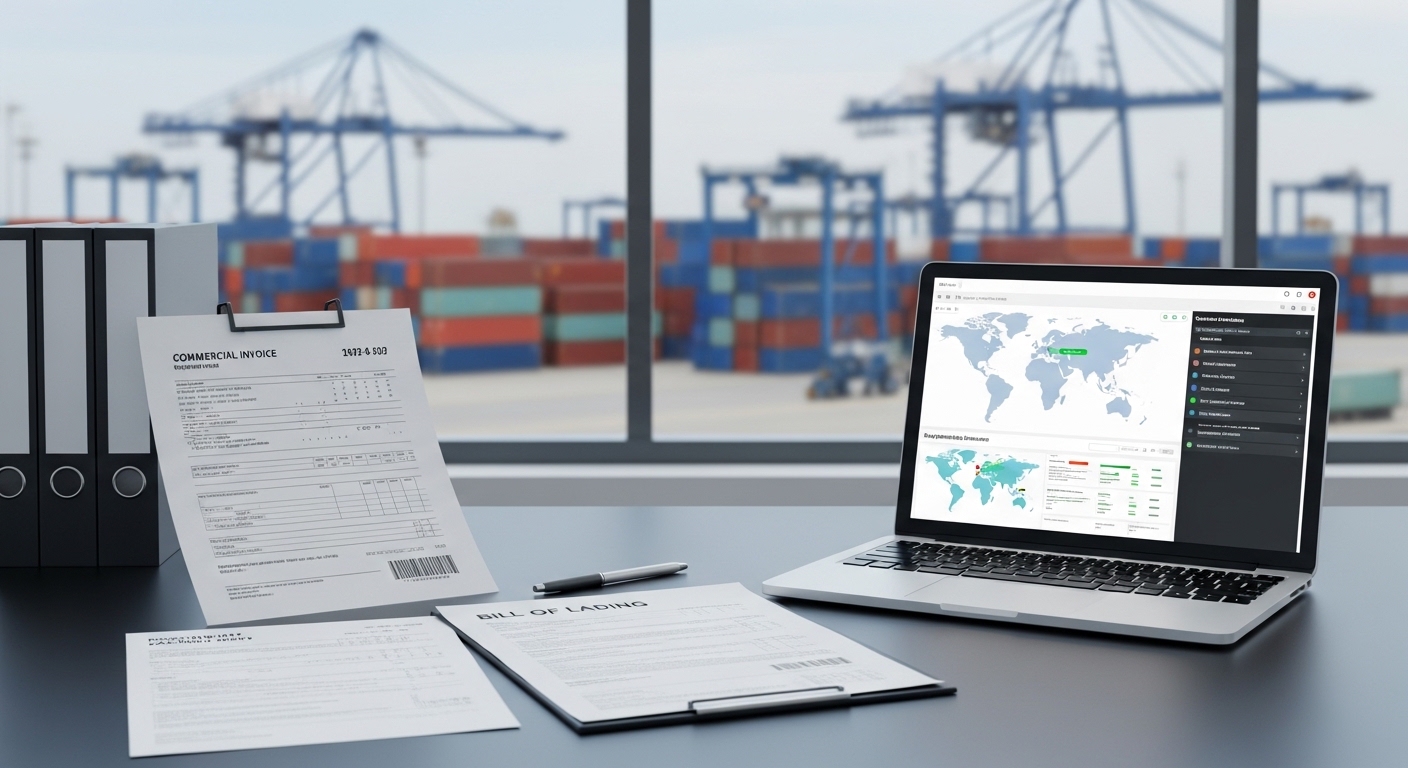
The Bill of Lading is perhaps the most critical document in the shipping process. It serves three primary functions: it is a receipt for the goods shipped, a contract of carriage between the shipper and the carrier, and a document of title (meaning the person holding it has the legal right to the goods).
- Master Bill of Lading: Issued by the actual carrier (shipping line) to the freight forwarder.
- House Bill of Lading: Issued by the freight forwarder to the actual shipper.
- Straight B/L vs. To Order B/L: A “Straight” B/L is non-negotiable and sent directly to a specific consignee, while a “To Order” B/L can be traded, which is common in Letter of Credit transactions.
2. The Commercial Invoice
If the B/L is the cargo’s “passport,” the Commercial Invoice is its “tax return.” It provides a detailed description of the goods, their value, the seller’s and buyer’s information, and the agreed-upon Incoterms® (e.g., FOB, CIF, DDP). Customs authorities use this document to determine the Harmonized System (HS) code and calculate the appropriate duties and taxes.
3. The Packing List (P/L)
Often overlooked, the Packing List is vital for operational efficiency. It details exactly how the cargo is packaged—whether in boxes, crates, or on pallets—along with weights and dimensions. It is used by warehouse staff for tallying and by customs officials for physical inspections to ensure the physical cargo matches what is declared on the Commercial Invoice.
4. Certificate of Origin (C/O)
The C/O certifies that the goods were manufactured or processed in a specific country. This is the primary document used to claim preferential tariff treatments under FTAs. In Vietnam, getting the correct “Form” (e.g., Form E for China-ASEAN, Form EUR.1 for the EU) is the difference between paying 0% duty or 20% duty.
5. Insurance Certificate
This document proves that the shipment is covered against loss or damage during transit. It specifies the extent of the coverage and the procedures for filing a claim. In many high-value shipments, the lack of an insurance certificate can lead to banks refusing to release funds under a Letter of Credit.
Avoiding International Shipping Problems Through Better Paperwork
Inaccuracies in paperwork in global freight are a leading cause of supply chain disruptions. When data is inconsistent across documents, it triggers red flags for customs compliance systems.
- Data Inconsistency: A common issue is when the weight on the Bill of Lading doesn’t match the Packing List. This often results in a mandatory customs inspection, adding 3-5 days of delay and inspection fees.
- Incorrect HS Codes: Misclassifying a product on the Commercial Invoice can lead to underpayment of duties (risking heavy fines) or overpayment (wasting company capital).
- Late Document Submission: If the original Bill of Lading does not arrive at the destination port before the ship, the cargo cannot be released. This leads to demurrage charges, which can exceed hundreds of dollars per container per day.
By prioritizing the “Key Freight Documents Explained” above, businesses can transition from a reactive “firefighting” mode to a proactive, streamlined logistics operation.
Practical Lessons for Logistics Professionals
Managing complex freight documentation requires a blend of attention to detail and modern technology. Here are several best practices to ensure your paperwork is always in order:
- Implement a “Triple-Check” System: Before any cargo leaves the warehouse, ensure the Commercial Invoice, Packing List, and Bill of Lading all share the same weights, quantities, and descriptions.
- Embrace Digitalization: Use digital platforms to store and share documents. Cloud-based visibility tools allow all stakeholders to access the latest versions of paperwork in global freight in real-time, reducing the risk of working from outdated files.
- Consult Customs Specialists Early: For new product lines or new markets, have a customs broker review your draft documents. This identifies potential international shipping problems before the goods are even packed.
- Standardize Templates: Use standardized templates for Invoices and Packing Lists to ensure that mandatory fields (like Country of Origin, HS Codes, and Net/Gross weight) are never missed.
How Scanwell Logistics Vietnam Can Help
At Scanwell Logistics Vietnam, we understand that managing Key Freight Documents Explained in this guide can be overwhelming, especially with the ever-changing regulations in Southeast Asia. Our local expertise combined with a global network allows us to act as an extension of your supply chain department. We don’t just move boxes; we manage the critical data flow that keeps those boxes moving.
From verifying the accuracy of your Commercial Invoices to assisting with the application for various Certificates of Origin, our team ensures that your cargo clears customs smoothly and stays compliant with both Vietnamese and international laws.
- Customs Brokerage: Expert handling of VNACCS/VCIS declarations and document review.
- Ocean Freight: Seamless coordination of B/L issuance for FCL and LCL shipments.
- Air Freight: Rapid processing of Air Waybills for time-critical electronics and garments.
- Warehousing: Precise Packing List generation and inventory management.
- Visibility Tools: Digital access to all your shipping documents through our secure platforms.
Conclusion
Documentation is the “invisible infrastructure” of global trade. As we have seen in this exploration of Key Freight Documents Explained, the Bill of Lading, Commercial Invoice, and other supporting papers are more than just bureaucratic requirements—they are the legal and financial safeguards of your business.
While the challenges of international shipping problems and complex paperwork in global freight will always exist, they can be managed effectively through a combination of rigorous internal processes and the right logistics partnership. By mastering these documents, you reduce lead times, minimize costs, and build a more resilient supply chain capable of competing on the global stage.
Call to Action
Ready to turn these logistics insights into real competitive advantages?
Explore Scanwell Logistics Vietnam
Contact our experts for tailored support
FAQ
What happens if I lose the original Bill of Lading?
Losing an original B/L is a serious issue. Usually, the carrier will require a “Letter of Indemnity” (LOI) or a bank guarantee, which can be expensive and time-consuming, before they release the cargo. This is why many shippers now use “Telex Release” or “Sea Waybills” which do not require the physical movement of original documents.
Is a Packing List always required if I have a Commercial Invoice?
Yes. While they share some information, the Packing List focuses on the physical dimensions and packaging, which is essential for warehouse planning and customs inspections. Without it, customs may delay your shipment to perform a manual count of the cargo.
How does a freight forwarder like Scanwell help with documentation?
A professional forwarder acts as a filter. We review your documents for errors, ensure they meet the specific requirements of the destination country, and coordinate the electronic submission to carriers and customs, significantly reducing the risk of errors and delays.